
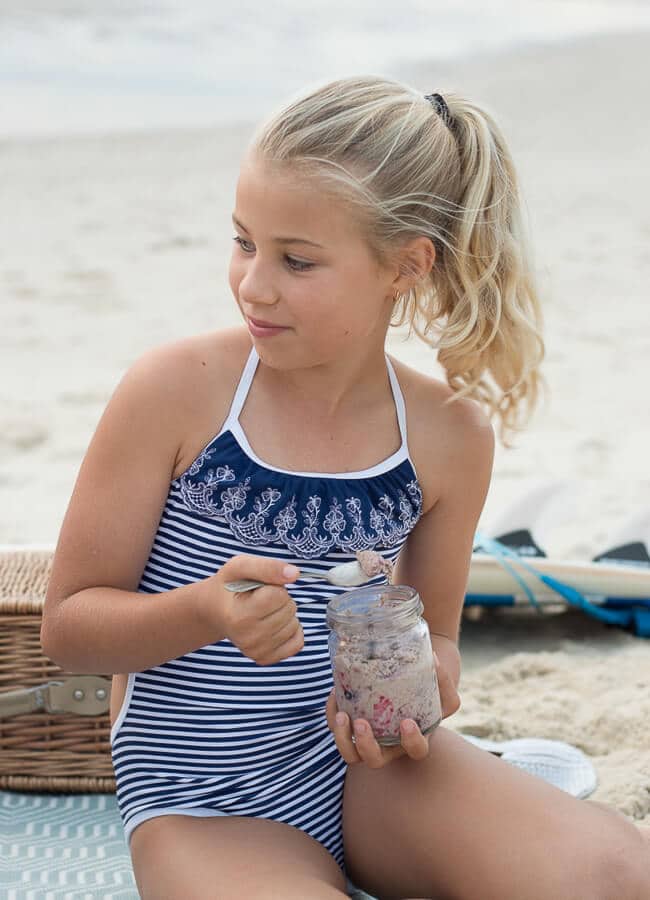
I’ve talked a lot already about the importance of building a food culture in your household in order to develop healthy eating habits in children of any age. If you’ve missed it, you can catch up here. Now, I’m going to explore the habit of snacking and some healthy snacking tips.
Let’s face it, we’ve become a society of snackers. Studies confirm that the rate of snacking and amount of calories ingested via snacks has increased dramatically over the years. A 2010 US study, found that the number of eating occasions has increased over the past 30 years across all age groups, including children. The intake of beverages as snacks has also markedly increased amongst children.
I don’t believe there is an issue with snacking per se, rather the types and regularity of snacks children consume. I hate to push any particular patterns for food consumption, as I realise that every family has their own schedules and each person within that family has their own requirements. But here are some of my ideas on snacking and some of the common pitfalls I’ve encountered over the years:
Control the amount and timing of snacks for kids
I simply don’t allow snacks within a couple of hours of a meal (ensuring my kids are always ravenous come dinner time). If my kids are incessantly moaning at me close to dinner time, I may hand out some raw vegetables off the chopping board, but other than that they wait. It may seem harsh and I understand the temptation for peace and quiet in these circumstances. But if they have had lunch and a decent afternoon snack, then you are not doing them or yourself any favours to give in. I know many parents who allow their children to snack right up to dinner time, then battle with them over the dinner table because they are fussing over the meal – the child is simply no longer hungry because they are full on snacks! It’s not pleasant for either party and it sets an animosity over eating that could have been avoided.
Making every mouthful count
This is critical, especially for children who are natural grazers. Falling into the trap of doling out packet after packet of convenience foods will lead to nutritional deficiency and no desire for a proper meal. It is essential to make sure that even snacks are nourishing children’s’ tiny bodies. Remember that children have a much smaller stomach capacity than adults, but a much greater nutrient requirement, so every mouthful needs to count.
Treats aren’t snacks
Snacks are a daily mini-meal and they need to be nourishing. Treats are treats…occasional or celebratory, NOT daily. I recommend a little protein be part of all snacks. I find if I give my kids a piece of fruit or a bowl of popcorn (or another simple carbohydrate), then they are likely to be complaining that they are still hungry within minutes. They are much more sustained when protein is part of the snack and less likely to keep hassling me for more.
The kitchen’s closed for business
Closing the kitchen may be necessary for some kids. If you find yourself cleaning up from the last snack or meal preparation, only to be receiving demands for more food, then you may need to close the kitchen! But note, this is less likely to happen if the snack is in the first instance, nourishing. We live in a society of instant gratification and I believe children can learn delayed gratification via food. Setting times when the kitchen is ‘open’ works for some and makes meal or snack times worth waiting for. Remember that feeling a little hungry is not going to damage your child and that teaching them to wait is an important developmental milestone.
Busy school kids
Snacks are important when your kids aren’t great school lunch eaters. Some really ‘busy’ kids don’t prioritise lunch times for eating (playing is much more enticing). So they often return home from school with their lunch box intact! For some kids it is a constant battle, for others, it’s only occasional. There are two things you can do here. If they are repeat offenders, then you need to make sure the bookends of the day (breakfast and the after school snack) are really sustaining and nourishing and pack just a small amount of easy to grab finger food in their lunch box. If it is occasional, I have a rule with my kids that what they don’t eat out of their lunchbox, they finish before they get an after school snack. This teaches children not to waste valuable food (and to eat the lunch packed for them)!
Ways to kerb the need to snack all day long
Breakfast needs to be a high protein, high saturated fat meal
I have discussed the importance of breakfast, including some fascinating data to empower you to go the extra mile with this crucial meal. You can read about it here. A satisfying breakfast sets a pattern for healthy food choices for the day and less need for snacks.
Lunch should also include protein
Again, by including a source of protein, your child will not need to snack all afternoon. I really notice the difference in my children’s eating habits, mood and ability to concentrate when they haven’t eaten protein at breakfast and lunch (like on holidays sometimes or if they’ve had a sleep over). For lots of ideas and types of protein, see here. For all the lunchbox packing inspiration you’ll ever need, check out my best selling ebook ‘The Well Nourished Lunchbox’ – here.
Ideas for snacks
We have been sold the idea by the food industry that certain foods are for snacking and others for meals. I would like to encourage you to think outside the square with snacks – any real, whole food can form a snack. Whilst I do bake or make specific ‘snacks’ for my children, usually for the lunch box, I also often give them a mishmash of just about anything for snacks! It is not uncommon for them to get a ‘snack plate’ most afternoons. This is a bit of an all sorts – they never quite know what they will get (but it keeps them interested) and takes the pressure off of me to have something ‘planned’. Their snack plate may have a few leftovers, is often a mix of sweet and savoury and could be absolutely anything from the fridge or pantry. Think, a little bowl with a piece of fruit or vegetable, a few nuts, biltong or meat sticks, olives, a cube of cheese and a little raw chocolate (ie; plant food, carbohydrate, protein and a little deliciousness)! I often use after school to include nuts, seeing as school is a nut free zone. Leftover meals also make for great snacks.
I hope this has given you some ideas for snacking kids. My recipes for snacks and treats are all created with sustenance and nourishment in mind. You will find sweet inspirations here and savoury inspirations here.
Share some of the things you give your kids to snack on. Do you have any questions, if so please post in the comments below and I’ll do my best to answer them
Family Ad

The Wholefood Mama says
I just love this post, so detailed and informative. I agree with everything you have written here and will be linking to it on my blog as my readers will get so much from reading it too. A healthy appetite at meal times is ESSENTIAL to children eating meals and I think it is completely under valued. Thanks for taking the time to write this. Nikki
Georgia Harding says
Hi Nikki, thanks so much for your comment. I really enjoy writing about children’s heath, that’s why I started the Well Nourished Child series – I just had so much to say on the topic! Improving the eating habits of this generation is something I am very committed to as a naturopath and mother. Thanks for linking it to your blog, much appreciated. I’m in the process of establishing links from my site at the moment (my work in progress)! Will be in touch G x
Zane says
Thank you so much for all the information. My daughter Vivienne is 6 and I feel like I’m struggling and need help. Your webpage is so helpful!!
Vivienne could snack all day long and apparently always hungry! I notice myself saying “no” very often and I start to really dislike myself for that. I’m really scared that her relationship with food will be negative so I started to explain her why I’m saying no. And she understands that better.
I wondered if your kids are nagging or the kitchen is closed, how are you handling it? Do you explain or is it just simply a no?
Thanks again! x
Georgia Harding says
Hi Zane, glad you are finding some inspiration here. Hopefully the tips I’ve included will help reduce her desire to snack all day long. For some families this works. If it isn’t working for you, then she is old enough for you to discuss that you don’t want to spend all day preparing food for her, so she will need to eat when you serve set meals (explain what they are, let her have some say in the decision to streamline meal times).
Ultimately it is up to you when and what she has to eat . She decides how much she eats. So in answer to your question, I’d clearly explain the rules/boundaries around food and to begin with it will involve saying ‘no’ and even a few tears. Generally big and little people aren’t to happy to change, but once a new normal is found, life might be a little easier for both of you. Good luck G x
Zane says
Thank you so much Georgia! Your message makes me feel better. I have talked to her this morning about “treat days” and snack options and she literally gave me her thumbs up and understood. I am sure it will be a hard week but it will make it much more easier in a long run. Thank you for all the recipes. Will purchase the lunchbox e box today. Much love to you x
Kelly says
Hi, the sweet inspirations link at the bottom of this peace takes you to a recipe for sweetcorn soup. Is this an error?
Thanks
Kelly
Jenny says
Hi is it possible for you to have a nutritional panel with each recipe as I have a type 1 diabetic child and the carbohydrate portions are very important
Many thanks
Jenny