
This rice and quinoa pilaf is the kind of comfort food that feels like a warm hug in a bowl. The buttery grains, gentle spices and bursts of sweetness from the currants make it incredibly moreish, and it’s one of those sides that turns any simple meal into something deeply satisfying. I first enjoyed a…
Quinoa
Quinoa Fried Rice
This quinoa fried rice is a lighter, healthier twist on the classic take-out dish, made with protein-rich quinoa, plenty of fresh vegetables, eggs and a splash of tamari. It’s quick, nourishing, and a brilliant way to use up leftover quinoa. You can serve it as a side or bulk it up with extra protein for…
Savoury Quinoa Breakfast Bake
This savoury quinoa breakfast bake is a protein-rich, satisfying way to start your day – though sometimes I have it for lunch or dinner too. Combining cooked quinoa, eggs, cottage cheese, and your favourite veggies, it’s a wholesome meal that’s easy to make and perfect for meal prep. With approximately 30g of protein per serve,…
Mediterranean Quinoa Bowl
This Mediterranean quinoa bowl is a refreshing, colourful, and nutrient-packed meal that’s perfect for lunch or dinner. Loaded with fresh veggies, creamy avocado and a delicious homemade dressing, it’s a satisfying and wholesome dish that’s simple to prepare. Health benefits Quinoa is a fantastic source of plant-based protein and fibre, keeping you full and energised….
Pumpkin Quinoa Salad
This Pumpkin Quinoa Salad is a delicious combination of flavours and it’s very easy to make. While the pumpkin and onion is roasted the quinoa is cooked – cool it all down and then toss together with rocket, feta, pumpkin seeds and olives and drizzle over a simple balsamic dressing. This easy to make quinoa…
Tuna Nourish Bowl
Looking for a satisfying and healthy lunch option that won’t break the bank? Look no further than this Tuna Nourish Bowl! Packed with nutritious ingredients like protein-rich tuna, leafy greens, and fiber-filled veggies, this bowl is a great way to fuel your body while keeping your taste buds happy. Plus, with the ability to make…
Garlic Kale Quinoa Bowl
This Garlic Kale Quinoa Bowl is a quick and easy protein rich, super nourishing brekkie or healthy lunch. I often make it when I have leftover quinoa which makes it even easier and quicker to make. I’ve added a few variations too so you can adjust it to suit your pantry supplies and tastes. Health…
Quinoa Kale Salad
This delicious, easy to make Quinoa Kale Salad is a beautiful side dish or a complete, super nourishing stand alone meal. Enjoy as is or feel free to build on it by adding in extra vegetables or any protein you like. My garden is overflowing with kale right now, if yours is the same, then…
Lamb Shank Quinoa Soup
This Lamb Shank Quinoa Soup recipe came about out of vivid memories of the Lamb Shank Pearl Barley soup my nan used to make often. It’s got all the flavours of this old time favourite, just with a whole lot more goodness. Loaded with classic soupy vegetables, this is warming, nourishing and super satisfying and…
Quinoa Stuffed Butternut
This spiced Quinoa Stuffed Butternut is a complete vegetarian meal that’s perfect to warm up with. Sometimes referred to as butternut squash, this is a favourite pumpkin that is so versatile. Slightly sweeter than other varieties of pumpkins, it suits roasting perfectly. The combination of fresh herbs, spices, feta and lemon make this stuffing absolutely sensational-…
Chocolate Quinoa Porridge
This Chocolate Quinoa Porridge is a delicious pudding that’s healthy enough for breakfast, and sumptuous enough for dessert. If you’ve ever wanted dessert for breakfast, this is the recipe! Filling and sustaining for the day ahead, you can adjust the sweetness according to your tastebuds and of course vary the fruit according to season. My…
Orange Kale Quinoa Salad
This Orange Kale Quinoa Salad is a substantial side and so tasty and super nourishing. My kids declared this hands-down the most delicious way to eat kale! Having a quick and easy salad to whip up in less than 30 minutes is going to be a sanity saver and with multiple fruit options, it is…
Superfood Quinoa Pilau
This Superfood Quinoa Pilau is a wholesome, nourishing dish packed with nutrient-dense ingredients. With a perfect balance of flavors from quinoa, sweet potato, kale, and goji berries, this pilau can be enjoyed on its own or as a delicious side dish. It’s versatile and customisable, making it ideal for any meal.
By now you all know I love to put a healthy spin on classic recipes and make them as nourishing as possible (without any compromise on taste). This delicious Superfood Quinoa Pilau recipe is my twist on the classic, which is traditionally made with rice.
The ‘superfood’ tag is generally used to describe foods that are particularly high in essential nutrients, phytonutrients and antioxidants. They are especially immune supportive and provide a wide range of essential vitamins and minerals to your body.
This recipe is super given that it’s a combination of particularly nutrient dense superfood ingredients. I hope you love it.
Superfood health benefits
Quinoa (pronounced ‘kin-wah’) is a complete plant based protein which has an extraordinary nutrient profile.
Kale is a fibre rich, nutritional powerhouse. It’s a great source of antioxidant vitamins A and C, as well as protective isothiocyanates and indoles (phytonutrients).
Goji Berries are an immune supportive, anti-oxidant rich, very nutrient dense food. They are my number one choice when it comes to dried fruit.
Turmeric is a powerful anti-inflammatory herb. In a word where inflammation underpins so many disease, turmeric is an important part of a healthy diet.
For more practical info on ‘superfoods’ and how to include them in your diet, click HERE.
Ingredients
This pilau uses quinoa, sweet potato, kale, and pumpkin seeds, with cinnamon, cardamom, turmeric, black pepper, and topped with goji berries.
How to make this superfood pilau
Start by rinsing or soaking quinoa to remove bitterness, then cook it with onion, sea salt, cinnamon, and cardamom. While the quinoa cooks, roast diced sweet potato with cinnamon and olive oil, then add kale and pumpkin seeds for the last few minutes to crisp them. After the quinoa has cooked, fluff it and mix in the turmeric and black pepper. Combine it with the roasted veggies, and top with goji berries just before serving.
Serving suggestions and how to store
This dish can be served on its own or with grilled, baked, or BBQ’d protein like fish, chicken, or tofu. Store leftovers in an airtight container in the fridge. For make-ahead prep, keep the roasted kale and pumpkin seeds separate until serving to preserve their crunch.
Vary this to suit your dietary needs
To make this recipe vegan or vegetarian, use vegetable stock or water to cook the quinoa. For a quicker version, use leftover cooked quinoa and skip some of the preparation steps. You can also add more vegetables or swap them out based on what you have on hand—this dish is easily customisable to suit your preferences.

Superfood Quinoa Pilau
This Superfood Quinoa Pilau is a nutrient dense meal or side dish. It contains a fabulous variety of superfoods to support and truely nourish your body.
Servings: 4
Ingredients
- 170 g quinoa (1 cup)
- 1 red onion/s -finely diced
- 500 ml water (2 cups) or bone broth
- 1½ tsp sea salt - or to taste
- 1 cinnamon quill
- 4 cardamom pods -bruised
- 1 sweet potato/s -diced
- 2 tbsp extra virgin olive oil -extra virgin
- ½ tsp ground cinnamon
- 1 bunch/s kale -leaves torn off stems
- 30 g pumpkin seeds (¼ cup)
- 30 g goji berries
- ½ tsp ground turmeric
- ground black pepper
Instructions
- Preheat your oven to 180°C/350°F (fan-forced).
- Rinse the quinoa really well in a fine sieve or ideally soak it for 1-12 hours to remove the bitter tasting saponins.
- Finely dice the red onion and put into a pot with the quinoa and 2 cups of water or broth. Add ½ teaspoon of sea salt, cinnamon quill and cardamon pods. Bring to the boil then reduce to a simmer for 20 minutes or until the water is all absorbed.
- Whilst that is simmering, line a large oven tray with baking paper.
- Dice the sweet potato into 2 cm pieces and place at one end of the tray leaving room for the kale and pumpkin seeds which you'll add later.
- Drizzle with half tablespoon of the olive oil, toss and sprinkle with ½ teaspoon of the sea salt and the cinnamon. Bake for 20 minutes.
- Now wash the kale leaves well and tear the soft leaves from the woody stem. Place them into your serving/ salad bowl and add the remaining one and half tablespoons of olive oil and ½ teaspoon of the sea salt. Massage the oil into the leaves.
- After the sweet potato has cooked for 12 minutes, add half of the kale leaves, in a single layer. I choose the thicker outer leaves to roast and reserve the younger, more tender leaves for the salad.
- Also add the pumpkin seeds to the tray. Cook along side the sweet potato for the remaining 8 minutes to crisp the kale leaves and toast the pumpkin seeds.
- By now your quinoa will be close to being cooked. Stir it and make sure it has absorbed the water or broth. Remove the pot from heat, cover, and let the quinoa steam for 5 minutes. This step gives the quinoa time to pop open and the little white spiral to appear. Fluff with a fork and allow to cool a little. Add the turmeric and black pepper and mix well.
- You can serve this dish either warm or cold. If serving cold allow the quinoa to cool completely.
- Remove the cinnamon quill and add the quinoa to the salad or serving bowl.
- Mix in the roasted sweet potato, pumpkin seeds and top with the crisp kale (add the pumpkin seeds and crispy kale right before serving or they lose their crunch).
- Sprinkle over the goji berries and enjoy.
Serve
- As is or with a simple piece of grilled, baked or BBQ'd protein like fish, chicken, red meat or a vegetarian protein.
Make-ahead
- Just keep the kale chips and pumpkin seeds aside until serving.
Store
- Store in an airtight container in the fridge.
Notes
Vegetarian and vegan
Choose water or vegetable stock to cook the quinoa.Onion-free
Replace the onion with finely diced fennel.Cheats version
Use leftover cooked quinoa. Fry the red onion in a little olive oil to soften it. Then add the pre-cooked quinoa, half teaspoon ground cardamon, half teaspoon ground cinnamon (these replace the quill and pods) and one teaspoon sea salt. Toss together and continue from step 5 in the method.Add more/different vegetables
Yes, you can absolutely add in extra or different vegetables. It's a very versatile dish.grains lemon chicken broth mushroom
Quinoa Porridge
Quinoa porridge is a creamy, satisfying breakfast that’s naturally gluten-free and packed with essential nutrients. Perfect for a healthy breakfast, it’s a great alternative to traditional porridge and can be customised to suit your taste preferences.
This gluten and grain-free Quinoa Porridge recipe can be as simple as the quinoa and your choice of milk. But it’s much more nutritious and delicious with the optional extras. It’s also a great way to use up left over quinoa. So next time you are planning a quinoa based meal, make sure you cook a bit extra for breakfast the next day. I have included instructions for cooking the quinoa in case you need it.
Quinoa Porridge is a fabulous, protein rich alternative to an oat based porridge. It’s also my next recipe to feature on JamieOliver.com – my twist on Jamie’s Banana and Cinnamon Porridge recipe. Enjoy!
Health benefits of quinoa porridge
Quinoa is a complete protein, making this porridge an excellent choice for starting your day with a nutrient-dense meal. It’s rich in fibre and minerals like magnesium and iron. Pairing it with fruits or nuts boosts its antioxidant and healthy fat content, offering long-lasting energy.
Ingredients
This porridge combines cooked quinoa, milk of your choice (like creamy coconut milk), and a touch of natural sweetness from honey, rice malt syrup, or maple syrup. Optional extras like cinnamon or nuts add depth of flavour and texture.
How to make this quinoa breakfast porridge
Simply heat cooked quinoa, milk, and sweetener on the stove in a small saucepan until warmed through. Add optional spices for an aromatic twist. Top with your favourite fruits or nuts for added crunch and flavour.
Serving suggestions and how to store
Top with nuts or seeds and serve immediately. I also like this served with slightly acidic fruits like citrus, pineapple, kiwifruit, passion fruit or fresh berries (to cut through the creaminess of the porridge). Banana is lovely too. Store any leftovers in an airtight container in the fridge and reheat with a splash of milk before serving.
Vary this quinoa porridge to suit your dietary needs
Opt for dairy-free milk to make it vegan-friendly, and substitute nuts with seeds for a nut-free option. For a low-fructose version, use rice malt syrup and pair with low-fructose fruits like berries. For a protein boost add in a scoop of your favourite protein powder (flavourless or vanilla), or a few tablespoons of the Protein Power Booster. Alternatively add in two whisked egg yolks at the end of cooking. Cooking extra quinoa ahead of time is a great time-saving tip.

Quinoa Porridge
This delicious Quinoa Porridge is an easy to make and sustaining start to the day. It suits gluten, dairy & egg-free diets.
Servings: 4
Ingredients
- 2 cup/s cooked quinoa - or ¾ cup uncooked
- 250 ml milk (of choice) (1 cup)
- 30 g rice malt syrup, honey or maple syrup (2 tbsp or adjust to taste)
Optional extras
- 1 tsp ground cinnamon
- 1 tsp ground cardamom
- 35 g nuts (¼ cup) of your choice
Instructions
- In a small saucepan, place the quinoa, sweetener, optional extras and milk of your choice and heat until just hot (but not boiling).
Serve
- Top with the nuts or seeds and serve immediately. I like this also served with slightly acidic fruits like citrus, pineapple, kiwifruit, passion fruit or berries (to cut through the creaminess of the porridge). Banana is lovely too.
Store
- Store in an airtight container in the fridge.
To Cook Quinoa (if not suing leftovers)
- Firstly rinse the quinoa in a fine sieve really well for at least 1 minute (this removes the bitter saponins from the quinoa). Cook the quinoa by placing it into a pot with 1½ cups of water.
- Bring the mixture to a boil over medium-high heat, then decrease the heat a bit to maintain a gentle simmer. Cook uncovered until the quinoa has absorbed all of the water, about 10 to 12 minutes.
- Remove the pot from heat, cover, and let the quinoa steam for 5 minutes. This step gives the quinoa time to pop open and the little white spiral to appear. After 5 minutes, remove the lid and fluff the quinoa with a fork. Allow to cool.
Notes
Dairy-free
Make with your favourite dairy free milk.Up the Protein
To boost the protein, stir through 2–3 tablespoons of the Protein Power Booster, a scoop of your favourite protein powder, or some hemp seeds. You can also whisk in two egg yolks during the final minutes of cooking. I often add a good scoop of this collagen protein—it’s completely flavourless, so it blends seamlessly into any recipe without impacting the taste.Nut-free
Leave out the nuts and top with a mix of seeds.Low-fructose
Use rice syrup as a sweetener. Serve with low-fructose fruits such as berries.Vegan
Choose rice malt or maple syrup as your sweetener.Time Saving Tip
If cooking quinoa for a meal, always cook up extra to have for breakfast.I'd love to hear how you like this - rate this recipe or post a comment below.
Quinoa Tabbouleh
This Quinoa Tabbouleh is one of my absolute go-to salads—it’s incredibly easy to make, bursting with fresh flavours and versatile enough to pair with just about anything. Plus, it keeps well for a few days, so you can enjoy it as leftovers for lunch or dinner. Whether you’re serving it at a family gathering or packing it for work, this salad is a winner every time.
Health benefits
Quinoa is a complete protein and has an extraordinary nutrient profile. I’ve written more about why I love it here. Parsley is so much more than a garnish. It is a very rich source of vitamin K, C and also iron (double spinach). It also support digestion, detoxification and has one of the highest counts of antioxidants among plants. Best of all it is really easy to grow in a pot or in your herb garden! This recipe is a bit of a change from a traditional tabbouleh which is made with bulgur wheat and tomatoes, but it’s just as delicious and full of nutrition.
Ingredients
This gluten-free Quinoa Tabbouleh is my take on the classic middle eastern salad, made with simple, wholesome ingredients like quinoa, flat-leaf parsley, mint, red onion, capsicum, and cucumber. The dressing, made with garlic, fresh lemon juice and extra virgin olive oil, ties everything together with a bright, zesty finish.
How to make this Quinoa Tabbouleh salad
Making this quinoa tabbouleh is a breeze! Start by rinsing and cooking the quinoa until it’s light and fluffy. Let it cool while you chop the herbs and veggies. Mix everything together in a large bowl, then shake up the simple lemon and olive oil dressing to pour over the salad. It’s as easy as that—fresh, flavourful, and ready to enjoy.
Serving suggestions and how to store
Serve this quinoa tabbouleh as a side dish with grilled meats, or add in some hummus and pita bread for a feast. It’s also great in wraps or as a filling for fresh spring rolls. To store, keep it in an airtight container in the fridge for up to three days—just wait to add the dressing until right before serving to keep it fresh.
Vary this to suit your dietary needs
This salad is easy to customise! If you’re avoiding onions, simply leave them out. Garlic can be replaced with a dash of ground cumin and cayenne for a different flavour profile. To make it a heartier meal, toss in some grilled chicken, lamb, fish, or even add a poached egg on top. The possibilities are endless!
Check out the variations below the main recipe for tips on how to adapt it to your specific dietary needs.
For loads of delicious, healthy and easy to make salads, click HERE.

Quinoa Tabbouleh
A more nourishing version of the traditional version, this gluten-free Quinoa Tabbouleh is so delicious. I hope you love it as much as I do.
Servings: 4
Ingredients
- 170 g quinoa (1 cup) or approximately 3 cups cooked
- 1 red onion/s (small) finely diced
- ½ bunch/s fresh parsley leaves -finely diced
- ¼ bunch/s fresh mint leaves -finely diced
- 2 red capsicum/s -diced
- 1 Lebanese cucumber (small) diced (none in this photo as I can't stand it)
Dressing
- 1 clove/s garlic -finely diced or crushed
- 1 lemon/s -zest and juice (approx. ¼ cup juice)
- 120 ml extra virgin olive oil (½ cup) extra virgin
- Sea salt and freshly ground black pepper -to taste
Instructions
- Firstly rinse the quinoa in a fine sieve really well for at least 1 minute (this removes the bitter saponins from the quinoa). If you have time to soak the quinoa in water with a splash of apple cider vinegar (for up to 12 hours) this will improve its digestibility. Cook the quinoa by placing it into a pot with 2 cups of water.
- Bring the mixture to a boil over medium-high heat, then decrease the heat a bit to maintain a gentle simmer. Cook uncovered until the quinoa has absorbed all of the water, about 10 to 12 minutes.
- Remove the pot from heat, cover, and let the quinoa steam for 5 minutes. This step gives the quinoa time to pop open and the little white spiral to appear. After 5 minutes, remove the lid and fluff the quinoa with a fork. Allow to cool.
- Mix it together with all of the other ingredients.
- To make the dressing, combine all of the dressing ingredients in a jar and shake well until combined (it looks almost creamy).
Thermomix method
- Rinse the quinoa in a fine sieve really well for at least 1 minute. Add 700g water to TMX bowl. Tip quinoa into steamer basket and cook for 15 minutes, Varoma temp, speed 4, MC on, or until cooked.
- Use your TMX spatula to remove the steaming basket and tip quinoa onto a plate to cool. Tip out remaining steaming water.
- Chop the parsley and mint in your TMX 5 seconds speed 5.
- Combine the salad and then make your dressing (without rinsing it).
- Chop the garlic 5 seconds, speed 8.
- Add the lemon, zest, olive oil and seasoning and combine 10 seconds, speed 6.
Make-ahead
- You can make quinoa ahead of time, store in the fridge, and then make this salad very quickly!
- Make ahead but don’t dress until right before serving.
Store
- Store in an airtight container in the fridge.
Notes
Onion-free
Simply omit the onion.Garlic-free
Replace the garlic with ½ teaspoon ground cumin and a pinch of cayenne pepper.Make a meal of it
I love this salad as is, but there are so many ways to make it into a big meal...- add any grilled protein such as chicken, fish, lamb, tempeh
- add some hummus and pita bread for a feast
- lovely with toasted nuts or seeds added
- I love this with grilled chorizo and goat or feta cheese
- have it for breakfast with a poached egg
- delicious in a wrap with falafel
- I often use leftovers to fill fresh spring rolls.
I'd love to hear how you like this twist on the classic. Post a comment or rate this recipe.
Blueberry Rocket Almond Salad
This Blueberry Rocket Almond Salad is a vibrant and refreshing dish perfect for a light lunch or a side. The combination of sweet blueberries, crunchy almonds and creamy feta makes it irresistible.
My local market has big buckets of fresh blueberries for sale at the moment, so this salad was born from my need to use my berries at every given opportunity. This is a great side salad or a meal in itself.
Kids in the kitchen
When my kids were little they hated anything green and leafy. So I started giving them a turn of spinning the salad spinner (they were about two). I served the leaves they spun every night as part of dinner, and low-and-behold, they eventually started to eat salad leaves (without fuss or encouragement) and enjoy them. Now they absolutely love salad leaves, even the spicy ones like rocket and mustard greens.
I also always made sure there were a couple of ingredients in the salad I knew they liked (mixed in with the greens) which made the idea of salad a lot more appealing. The blueberries here may just be your draw card.
Please to remember to persist and offer salads in many ways – they will eventually come around and like my kids, enjoy eating them.
Health benefits
Rich in antioxidants from blueberries and packed with fibre and healthy fats from quinoa and almonds, this salad provides a balanced mix of nutrients. The rocket leaves (arugula) are also a great source of vitamins A and K.
Ingredients
Rocket leaves, snow peas, blueberries, quinoa, toasted flaked almonds, and crumbled feta come together for this salad. The dressing is a zesty blend of lemon juice, olive oil, vinegar, and a hint of sweetness from rice malt syrup or honey.
How to make blueberry rocket almond salad
Combine all the salad ingredients in a large bowl. For the dressing, shake the lemon juice, olive oil, vinegar, and sweetener in a jar. Pour the dressing over the salad just before serving for maximum freshness.
Serving suggestions and how to store
This salad is delicious on its own or as a side dish with grilled fish or chicken. Store leftovers in an airtight container in the fridge, and add the dressing just before eating to keep the salad fresh.
Vary this blueberry rocket almond salad to suit
For a dairy-free or vegan option, omit the feta or replace it with vegan cheese. For a nut-free version, swap almonds with toasted sunflower seeds. Use rice malt syrup to make it fructose-friendly.
Take a look at the variations (below the main recipe) for suggestions to alter the recipe to suit many specific dietary requirements.
For lots more sides and salad inspo, take a look at my hugely popular ebook ˜Well Nourished Sides and Salads’– where vegetables become the hero of the dish! It also includes lots of tips to get kids involved and loving their veggies. It’s great value at just $9.95, click HERE to take a look.
For more delicious, easy to make healthy salad recipes, click HERE.
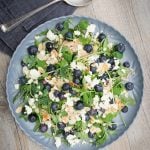
Blueberry Rocket Almond Salad
This Blueberry Rocket Almond Salad is a delicious, nourishing flavour combination and a beautiful accompaniment to any meal.
Servings: 4
Ingredients
- 25 g rocket leaves - washed (1 cup)
- 10 snow peas
- ½ cup/s blueberries
- 1 cup/s quinoa - cooked
- 40 g flaked almonds (¼ cup) toasted
- 40 g feta cheese (¼ cup) cow feta or goat, crumbled
Dressing
- 1 lemon/s (small) juice and zest
- 60 ml extra virgin olive oil (¼ cup)
- 1 tsp red wine vinegar - or raspberry vinegar
- 1 tsp rice malt syrup or honey
Instructions
- For the salad, combine the ingredients together in your salad bowl.
- For the dressing, shake the ingredients together in a jar.
- Dress the salad just prior to serving.
Notes
Dairy-free and vegan
Just omit the feta or replace it with a vegan cheese.Nut-free
Replace the almonds with toasted sunflower seeds.Fructose-friendly
Choose rice malt as your sweetener.Love to hear how you like this salad? Also, feel free to share your tips for encouraging your kids to love their salad.
Lemon, Tuna and Quinoa Salad
Every time I cook a batch of quinoa, I always make extra so I can make a salad for the kids and I for lunch the next day. Our favourite combo is this lemon tuna quinoa salad – it’s fresh, zesty and really quick and easy to throw together. Feel free to add in any raw or cooked vegetable you like, this is a very versatile recipe.
To source the most sustainable brands of tuna (in Australia), click here.
Health benefits
Quinoa is a complete protein and a great source of fibre, I’ve written about here. Tuna adds lean protein and omega-3 fatty acids, while the fresh veggies provide vitamins, minerals, and antioxidants.
Ingredients
This gluten-free recipe combines cooked and cooled quinoa, canned tuna, cherry tomatoes, leafy greens, carrot, and fresh herbs, all dressed with a tangy lemon vinaigrette made with lemon zest and juice, olive oil, red wine vinegar, and smoked paprika.
How to make lemon tuna quinoa salad
Start by rinsing and cooking the quinoa in a saucepan, letting it steam and cool. Shake the dressing ingredients together in a jar. Mix the cooked quinoa and tuna in a large bowl, then gradually add the dressing. Fold in the cherry tomatoes, carrots, greens, and fresh herbs. Toss well to serve.
Serving suggestions and how to store
Serve this salad as a main dish or a side with some crusty bread. It can be stored in an airtight container in the fridge for up to 2 days.
Vary lemon tuna quinoa salad to suit your needs
For a vegan or vegetarian version, replace the tuna with tofu or tempeh. You can also add nuts, seeds, or crumbled feta for extra flavour and texture. If tuna isn’t your thing, try substituting it with shredded chicken or beef.
Take a look at the variations (below the main recipe) for suggestions to alter the recipe to suit many specific dietary requirements.

Lemon, Tuna and Quinoa Salad
This Lemon, Tuna, and Quinoa Salad is a light, refreshing, and protein-packed meal perfect for a quick lunch or dinner. With fresh herbs, crunchy veggies, and a zesty lemon dressing, it's nutritious and delicious.
Servings: 2
Ingredients
- 130 g quinoa - or 2 cups cooked
- 185 g can tuna -drained
- 10 cherry tomatoes -halved
- 25 g leafy greens (1 cup)
- ¼ bunch/s fresh coriander or mint leaves -leaves picked off stems
- 1 carrot/s (large) grated or julienned
Dressing
- ½ lemon/s -zest and juice
- 60 ml extra virgin olive oil extra virgin (or roughly double the quantity of oil to lemon juice) (¼ cup)
- 1 tsp red wine vinegar
- Sea salt and freshly ground black pepper -to taste
- ¼ tsp smoked paprika
Instructions
- Firstly rinse the quinoa in a fine sieve really well for at least 1 minute (this removes the bitter saponins from the quinoa). Cook the quinoa by placing it into a pot with 1½ cups of water.
- Bring the mixture to a boil over medium-high heat, then decrease the heat a bit to maintain a gentle simmer. Cook uncovered until the quinoa has absorbed all of the water, about 10 to 12 minutes.
- Remove the pot from heat, cover, and let the quinoa steam for 5 minutes. This step gives the quinoa time to pop open and the little white spiral to appear. After 5 minutes, remove the lid and fluff the quinoa with a fork. Allow to cool.
- Place all of the dressing ingredients into a jar and shake well to combine.
- In a large bowl mix together the quinoa and tuna.
- Mix through the dressing, adding gradually until the quinoa and tuna are well coated but not drowning in dressing.
- Now fold through the tomatoes, carrot, leafy greens and herbs. Enjoy!
Store
- Store in an airtight container in the fridge.
Notes
Vegan and vegetarian
Omit the tuna and add in thinly sliced tofu or tempeh and toasted nuts.Don't like tuna
Replace it with another cooked meat like shredded or diced chicken, lamb or beef.Add nuts, seeds or dukkah
This is lovely topped with toasted nuts, seeds or even dukkah to add in a nice crunch.Add feta or goat feta
This is delicious with feta mixed through too. For lots more sides and salad inspo, take a look at my hugely popular ebook ˜Well Nourished Sides and Salads’- where vegetables become the hero of the dish! It’s great value at just $9.95, click HERE to take a look.Post your comments or rate this recipe below.
Quinoa Stuffed Mushrooms
These Quinoa Stuffed Mushrooms are a delicious, gluten-free and grain-free, vegetarian meal and a real family favourite. Friends have touted this a ‘restaurant quality’ meal, but they couldn’t be simpler to make. Line up flat mushrooms on a baking sheet or dish, stuffing with a flavoursome mix of onion, spinach and feta and topping with crunchy walnuts and chia seeds. Bake in the oven for 20 minutes and you have an impressive result with very little effort.
Health benefits
Mushrooms are a nutritious vegetable and one of the few sources of vitamin D. The garlic and red onion are wonderful immune building, detoxifying vegetables. The quinoa is a complete protein and fibre rich seed. More plant-based fibre and nutrition are provided by the spinach and walnuts. The chia is another excellent source of fibre, protein and essential fatty acids.
Ingredients
The key ingredients in this recipe are of course quinoa and mushrooms! Portobello or field mushrooms are used as a large, flat base and filled with a flavoursome mixture of the stems, onion, spinach, thyme and feta. This is then topped with walnuts which roast in the oven as it is baked, giving an extra flavoursome and crunchy topping. To complete the meal, the stuffed mushrooms are dressed with a zesty garlic and lemon dressing.
How to make Quinoa Stuffed Mushrooms
While your oven is preheating, rinse and cook the quinoa. Rinsing is important to wash off any saponins that can otherwise make the quinoa taste bitter. Drain well then transfer to a saucepan, cover with water and bring to a simmer. When the water has been absorbed, place a lid on the saucepan and turn off the heat. This traps the steam, completing the cooking without risking burning the quinoa. While the quinoa is cooking, you can de-stem the mushrooms and chop the stems finely, dice the onion and chop the spinach and fresh thyme. Once the quinoa is cooked, this can be added to the chopped vegetables as well as the feta cheese. Stir together well then press firmly onto the mushrooms on the baking sheet or dish lined with parchment paper. Top with the chopped walnuts and chia if you like, then bake. While baking, prepare the dressing if you are including this. I love the flavours of the dressing to add a bit of fresh zesty lemon to the dish.
Vary Quinoa Stuffed Mushrooms to suit
This recipe lends itself to many variations! I’ve included nut-free for school lunches, dairy-free, vegan and garlic-free. If you’re out of quinoa, that’s okay too! Rice or buckwheat also work for this stuffing. For green-avoiding people, there’s an easy substitute for the fresh spinach and if mushrooms really aren’t your thing, you can even swap them to make stuffed tomatoes or capsicums. The instructions are easy to follow with these variations so have a good look to suit your needs.
Serving suggestions and how to store
Serve your quinoa stuffed mushrooms warm with a sprinkle of fresh rocket and a drizzle of zesty dressing. If you have leftovers, they store beautifully in an airtight container in the fridge—just reheat them in a low oven until they’re warmed through.
More delicious, easy to make vegetarian meals HERE.
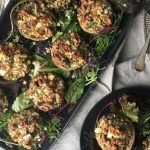
Quinoa Stuffed Mushrooms
One of my favourite meatless Monday meals, these Quinoa Stuffed Mushrooms are really tasty and quite simple to make. Plant powered nourishment!
Servings: 4
Ingredients
For the stuffed mushrooms:
- 135 g quinoa (¾ cups)
- 8 large portobello or field mushrooms -stalks removed and set aside
- ½ red onion/s (small) finely diced
- 30 g baby spinach - or kale leaves, finely chopped (approx. handful)
- 1 tbsp fresh thyme leaves -picked off the stalks (or 1 teaspoon of dried)
- 100 g feta cheese -or goats curd, crumbled
- 60 g walnuts (½ cup) roughly chopped
- 1 tbsp chia seeds (optional)
For the dressing (optional):
- 1 clove/s garlic -unpeeled (roasted with the mushrooms)
- 1 lemon/s -(small) zest and 2 tablespoons of juice
- 60 ml extra virgin olive oil -extra virgin (4 tbsp)
Instructions
- Preheat your oven to 180º C/350°F (fan-forced).
- Rinse the quinoa in a fine sieve really well for at least 1 minute (this removes the bitter saponins from the quinoa). If you have time to soak the quinoa in water with a splash of apple cider vinegar (for up to 12 hours) this will improve its digestibility. Cook the quinoa by placing it into a pot with 1½ cups of water.
- Bring the mixture to a boil over medium-high heat, then decrease the heat a bit to maintain a gentle simmer. Cook uncovered until the quinoa has absorbed all of the water, about 10 to 12 minutes.
- Remove the pot from heat, cover, and let the quinoa steam for 5 minutes. This step gives the quinoa time to pop open and the little white spiral to appear. After 5 minutes, remove the lid and fluff the quinoa with a fork.
- Chop the mushrooms stalks up and combine in a bowl with the quinoa, onion, spinach or kale and thyme leaves.
- Now mix through the feta or goats curd. Taste and season with sea salt and freshly ground black pepper.
- Spoon onto the mushrooms, pressing it into place and then top with the walnuts and sprinkle with the chia seeds.
- Place them in a baking tray with the whole clove of garlic and roast for 20 minutes.
- For the dressing mix together the zest, lemon juice and olive oil, and once cooked, squeeze out the soft centre of the roasted garlic and mix into the dressing.
Serve
- With rocket and a drizzle of dressing.
Make-ahead
- Re-heat in a low oven until just hot.
Store
- Store in an airtight container in the fridge.
Notes
Nut-free
Leftovers are great for school lunches. To make them nut-free substitute the walnuts with sunflower seeds or just omit altogether.Dairy-free and vegan
Replace the feta or goat cheese with a thick cashew nut cream. Recipe here.Garlic-free
Omit the garlic in the dressing.No quinoa
No worries, you can replace it with brown rice or buckwheat.Kids hate green
Replace the spinach with grated carrot.Don't do mushrooms?
Then you may not have read this far - but, you could substitute with half a tomato or capsicum with the centre scooped out.Hope you like this recipe? I love to receive your feedback, write a comment below to show your support!
Quinoa Patties
These Quinoa Patties are a fantastic way to enjoy a nutritious and delicious meal that’s packed with flavour and goodness. Perfect as a snack, lunchbox treat, or a light dinner, these patties are versatile and easy to whip up, making them a hit with both kids and adults. Plus, they’re a great way to sneak in some veggies!
Health benefits
Quinoa is a superfood I just love. It is a complete protein, providing all nine essential amino acids, while leafy greens contribute vitamins and minerals that support overall health. The addition of garlic and parmesan cheese not only enhances flavour but also adds beneficial nutrients. The eggs combined with the quinoa make this a wonderful, protein-rich vegetarian meal with approximately 18 grams of protein per serve.
Ingredients
For these yummy quinoa patties, you’ll need quinoa, parmesan cheese, garlic, spring onions, leafy greens (like kale or spinach or even fresh chives), fresh breadcrumbs, eggs, and seasoning with sea salt and black pepper.
How to make Quinoa Patties
Start by washing the quinoa well to remove any bitterness, then cook it in a saucepan according to these instructions and let it cool. In a food processor, blend the cheese, cloves garlic, and spring onions, then process the bread to make bread crumbs (if making them). Next, mix in the eggs and chopped greens, combining everything together in a medium bowl. Shape the mixture into patties and cook them in a fry pan or skillet in either coconut oil, olive oil or butter until golden brown on both sides.
Serving suggestions and how to store
These quinoa cakes are delicious served with avocado salsa, guacamole, or your favourite dips like pesto or hummus. They can be enjoyed warm or cold, making them perfect for lunchboxes or meal prep. Store any leftovers in an airtight container in the fridge for up to a week, or freeze them (with baking or parchment paper separating them) for a quick meal option later.
Vary this to suit your dietary needs
To make these patties gluten-free, simply use gluten-free bread or rolled quinoa. For a dairy-free version, omit the cheese and consider adding nutritional yeast and a good pinch of sea salt for flavour. If you’re not a fan of leafy greens, feel free to substitute them with grated carrot or sweet potato for a different twist.
Take a look at the variations (below the main recipe) for suggestions to alter the recipe to suit your specific dietary requirements.

Quinoa Patties
These quinoa patties are delicious hot or cold, as a side dish or as the main event. They are just so versatile, nourishing and delicious.
Servings: 4
Ingredients
- 180 g quinoa (1 cup) washed very well
- 45 g parmesan cheese (½ cup) grated
- 2 clove/s garlic -peeled and crushed
- 1 bunch/s spring onion/s -white part finely diced
- 30 g leafy greens -like kale, spinach, basil or another herb (1 cup approx.)
- 60 g fresh breadcrumbs (1 cup) or gluten-free breadcrumbs
- 4 egg/s
- Sea salt and freshly ground black pepper - to taste
Instructions
- After washing your quinoa very well in a fine sieve to remove the bitter saponins, cook your quinoa in a saucepan (instructions here). If you have time to soak the quinoa in water with a splash of apple cider vinegar (for up to 12 hours) this will improve its digestibility. Once cooked set aside to cool.
- In a food processor or powerful blender, grate your cheese and chop your garlic and spring onion. Set aside in a large mixing bowl.
- Now process your bread (works well from frozen) to a crumb. Add to the cheese mix.
- Without rinsing your bowl, process you eggs and greens until the greens are a chopped up as necessary. I like them a little in tact, but for veggie phobic kids, you may like to process them to a liquid.
- Now mix all the ingredients together until well combined and season well.
- In a large frypan, add a good couple of tablespoons of coconut oil or butter (or a mix of both).
- Heat over a moderate heat and drop a good heaped tablespoon of the quinoa mixture into the oil. This recipe should make approx. 15-16 patties.
- Press down a little with the back of a spatula.
- Cook until the edges start to brown. Carefully turn and brown the other side.
- Eat immediately or allow to cool and store in the fridge.
Thermomix method
- Soak the quinoa overnight, drain and rinse. If no time to soak, rinse several times, rubbing it so the bitter saponins are washed away. Cook in the basket with 700ml of water, Varoma temp, speed 4, 12minutes if soaked, 15minutes if just rinsed or until the little white tail on the seed appears.
- Set aside to cool and dry your TMX bowl.
- Process you cheese, garlic, and onion, 10 seconds, speed 4. Set aside.
- Make your breadcrumbs by processing frozen bread (broken into pieces), 10 seconds, speed 6. Set aside.
- Chop the leafy greens, 5 sec, speed 4. Add the eggs and process 5 seconds speed 4.
- Add back the cooked quinoa, breadcrumbs and cheese/onion mix. Season and mix on reverse, 10 seconds, speed 3 (you may need to scrape the sides).
- In a large frypan, add a couple of tablespoons of coconut oil or butter (or a mix of both).
- Heat over a moderate heat and drop a good heaped tablespoon of the quinoa mixture into the oil.
- Press down a little with the back of a spatula.
- Cook until the edges start to brown. Carefully turn and brown the other side.
- Eat immediately or allow to cool and store in the fridge.
Serve
- With a squeeze of lemon juice
- With avocado tomato salsa (pictured) or guacamole
- With pesto or hummus
- With salad
- With grilled meat or fish and salad for a larger meal
Make-ahead
- They can be eaten cold or re-heated in the oven or a sandwich press.
Store
- Store in an airtight container in the fridge.
- Can also be frozen.
- My kids love these in their school lunchbox.
Notes
Gluten-free
Use gluten free bread or rolled quinoa.Dairy-free
Just omit the cheese (you can add in ¼ cup nutritional yeast for more flavour).No greens
You can substitute the greens with grated carrot or sweet potato.Love to hear your thoughts on these delicious patties. You can comment or rate this recipe below.
Whole grains – the best choice
Whole grains are nutritious, though like anything, in moderation. In this post, I hope to give you a better understanding of why grains are getting a bad wrap, as well as the healthiest way to include grains in your diet and those best avoided.
I’ve decided to post about grains, basically because it is a great place to start to gain an understanding of how processing can change something whole and nourishing, into a nutritionally void product. Also, because grains are grown in greater quantities, and provide more food energy than any other staple in the world. In fact in many cultures, grains constitute the majority of daily sustenance. As such, refined grains have sadly become the industrialisation of our food chains greatest nutritional disaster.
Whole grains, as they naturally occur, are a source of vitamins, minerals, a little (incomplete) protein, good fats, complex carbohydrates and fibre – all packed in one tiny little grain! They provide the body with a slow release, sustained form of energy, especially when soaked or sprouted. The process of refining grains basically removes the parts of the grain that house the vitamins, minerals, protein, fats and fibre, leaving only simple carbohydrates. Simple carbohydrates equate to a hit of energy (in the form of glucose) without the accompanying nourishment. The effect this has on the body is one of the primary drivers of many modern day diseases.
In the beginning…
So why are grains refined I hear you ask? Lets back track a little and discuss the primary reason, which is to extend their shelf life. By removing the germ and bran, grains last longer without going off. Interestingly, the refining process also makes grains less desirable to their natural predators – namely rodents, bacteria and fungi, all of which have the ability to destroy quantities of grain before it can be sold. For example, in the case of wheat, rats and mice are much less likely to consume it refined (their instincts are obviously better than ours)! So food manufacturers (in the name of profit), removed all the nutritious bits (fibre, fat, protein and over twenty vitamins and minerals – that we know of) to produce flour, a malleable commodity with a very long shelf life. However soon after wheat began to be refined, the people consuming flour and its products developed terrible deficiency diseases like beriberi (caused by a vitamin B1 or niacin deficiency). These same diseases occurred in countries consuming large quantities of polished white rice.
You would think the process of refining would have been re-evaluated at this stage? Think again. Not when there’s a large industry and lots of money at stake. Thus, the process of grain fortification was introduced to correct these clinical deficiency diseases. Today Food Standards Australia and New Zealand dictates a mandatory niacin and folate fortification in all wheat flour used for making bread. Whilst this process synthetically corrects the niacin and folate deficiency associated with making flour, it neglects the other nutrients critical to the nourishment derived from the whole grain. Judging by the growing epidemic of modern degenerative diseases linked to processed foods, I think that foods governing bodies may be missing the big picture all together.
Choose variety
In Australia we are fortunate to have a choice. To eat processed grains, which have had a few of their original nutrients replaced, albeit artificially, or consume whole grains with their nature given nourishment in tact. So what grains should we include in our diet? First I would say to eat ALL grain in moderation, especially wheat. The consumption of wheat has become quite insidious in our culture with many people starting the day with an often wheat-based breakfast cereal or toast. This is followed by a biscuit, cake, cracker or health bar for a snack, a sandwich at lunch and pasta for dinner – sound familiar? Even if you are choosing whole grain products, this is too much wheat. My mantra of variety, variety and more variety needs to be applied. When you eat the same food repeatedly (i.e., wheat), you are really limiting the amount of nutrition you can derive from your diet. Wheat and grains are not so much the problem, as is the way they are prepared and the quantities they are consumed in.
Nourishing v’s empty calories
Here are some suggestions for including a variety of whole grains in your diet. I refer to ’empty calories’ and by this, I mean food providing energy but with little or no nutrition. If you’d like to know more about a particular grain (and where to find it) then click on the link-
- Eat brown rice rather than processed white rice.
- Try spelt, Kamut, rye, millet or mixed grain bread instead of a straight wheat bread (more details on the most nourishing bread next post).
- Quinoa is a highly nutritious seed (containing a complete amino acid profile) and a delicious and an easy to prepare substitution for rice, couscous or pasta.
- Include rolled oats for breakfast or make oat based cookies, slices or crackers for snacks. Try my muesli for a great wholegrain breakfast.
- Any grains that are whole then rolled or ground (to flour) are nutritious grain choices, especially when soaked or fermented.
- Love pasta, then perhaps try some other varieties. I like rice and quinoa pasta (gluten free). Try different blends and brands as they do vary.
- Avoid refined, white flours – substitute with wholemeal or spelt flour. Forget all together ‘added fibre’, ‘added omega oils’ etc products. Health claims are just a marketing gimmick to persuade you to buy inferior products containing empty calories. Remember that if a product is ‘fortified’ or ‘enriched’, the whole grain just isn’t there to start with.
- Puffed or flaked grains, as found in the majority of breakfast cereals and many crackers, are best avoided. They are processed at such high temperatures that the fats and proteins can be dangerously altered and they really don’t contribute much nourishment.
- A frightening study has been described by Paul Stitt in his book Fighting the Food Giants. In the study, four groups of rats were fed a) a diet of whole wheat, vitamins and minerals, b) puffed wheat, vitamins and minerals, c) white sugar only and d) vitamins and minerals only. The whole wheat group lived for 1 year, the vitamin and mineral group lived for 8 weeks, the sugar only group lived for 4 weeks and the puffed wheat group lived for just 2 weeks. Time to look at alternative breakfast ideas perhaps? Click here for some inspiration.
- Lastly, consuming grains with fats like butter or full-fat dairy assists the absorption of many of the important nutrients that grains provide. So get out the butter, milk and cream to make the very most of your grain based meal.
- I’d also like to add that there are NO nutrients in grain that are not found in other foods. We seem to have been brain washed to think that we need grain for fibre and energy, we don’t. Fresh fruit and vegetable are more nutrient dense sources of fibre and carbohydrate.
- What about the bread I hear you ask? Oh, how I love to devour a hot crusty loaf fresh out of my oven, slavered with butter! Sadly not all bread are created equal, in fact, many are outright dangerous to consume. But more on how to navigate the minefield of your daily bread here.
Want to know more
Be kind to your grains, and your grains will be kind to you by Sally Fallon and Mary Enig is a worthy read.
Try some of my fabulous whole grain recipes…
Nourishing Toasted Muesli
Healthy Grain Salad
Nourishing Anzac biscuit
No bake, nut-free muesli bar