
If you’ve never made your own pickled beetroot, you’re in for a treat. This quick and easy healthy pickled beetroot recipe is a great way to preserve beetroot while enhancing its natural sweetness and earthy deliciousness. Made with apple cider vinegar and unrefined sugar, it’s a wholesome pantry staple you’ll want to keep on hand….
beetroot
Beetroot Feta Dip
Delicious and easy to make – this Beetroot Feta Dip is not only a stunning, colourful addition to any snack plate, it tastes incredible. It’s perfect to make for any festive ‘bring a plate’ dates – it’s nourishing, colourful and delicious!! Instead of visiting the dip section of the supermarket, go to the veggie and…
Chocolate Beetroot Cake
It might seem unusual to add vegetables to baking, but this Chocolate Beetroot Cake is a match made in heaven and work very well together to create a rich, fudgy, earthy cake. This recipe also happens to be gluten and dairy-free which adds to its versatility. I like to serve this cake as a dessert,…
Beetroot Feta Croquettes
These simple Beetroot Feta Croquettes are really easy to make and a delicious, colourful appetiser, light meal or snack. Beetroot is a rich source of fibre and a unique source of betaine, a nutrient that is known to protect against inflammation. Combined with feta and encased in a crunchy crumb, it’s one of my favourite…
Savoury Veggie Crackers
My kids are big veggie lovers now, but this hasn’t always been the case. One of the tricks that really helped along the way was creating fun, nourishing snacks like these Savoury Veggie Crackers. I’ve written extensively about raising real food loving kids HERE – it’s a topic I’m super passionate about. I also have a whole chapter in my ebook The Well Nourished Lunchbox dedicated to delicious ways to include vegetables in your child’s diet (as well as over 50 sensational recipes, including loads of savoury cracker options). Click HERE to find out more.
One thing I know for sure, is the more vegetables your kids eat, the more they will enjoy and be open to eating them. So when my kids were little and reluctant to eat a wide variety of veggies, I used to hide them in everything I cooked, including sweet and savoury baking (as well as presenting them in their whole form throughout the day and with every meal). You can read my thoughts on the benefits and pitfalls of ‘hiding’ veggies for picky eaters HERE.
I first made this cracker when my kids were teething (as a rusk of sorts). So I thought I’d re-invent it as a cracker my kids will enjoy now – and it’s safe to say they do! I love adding extra veggies anywhere I can and this cracker is really quick and easy to make. I hope you and yours enjoy it too.
Health benefits
Spinach adds a wealth of vitamins and minerals, including iron, calcium, and vitamins A and C. Wholemeal spelt flour provides fibre and complex carbohydrates, while optional sesame seeds and nutritional yeast add extra protein, healthy fats, and B vitamins. These crackers are a wholesome alternative to store-bought varieties, which often contain refined ingredients, vegetable oils and additives.
Ingredients
These vegan crackers feature a base of wholemeal spelt flour combined with pureed spinach, olive oil, and sea salt for a nutritious and delicious dough. Optional ingredients like garlic granules or garlic powder, sesame seeds and nutritional yeast enhance both flavour and nutritional value.
How to make these Savoury Veggie Crackers
To make these crispy crackers, start by blending the spinach and water in a food processor until smooth. Mix in olive oil, salt, sugar, baking powder, and any optional ingredients like sesame seeds or garlic powder. Gradually add the flour, adjusting as necessary until the dough reaches a play-dough-like consistency. Roll the dough out thinly with a rolling pin between sheets of parchment paper, cut into squares with a sharp knife (or a pizza cutter), and bake until crispy.
Serving suggestions and how to store
These dairy-free crackers are a great addition to a snack platter or paired with your favourite dip. Store them in an airtight container for up to a week, or freeze them and pop them into lunchboxes straight from the freezer for an easy snack.
Vary Savoury Veggie Crackers to suit your dietary needs
For a gluten-free or grain-free version, substitute the spelt flour with a gluten-free or paleo flour. These variations may need additional baking time to crisp up properly. If you’re in the mood for something fun and colourful, try replacing the spinach with beetroot for pink crackers. To make this recipe garlic and sesame-free, simply omit those ingredients.
Take a look at the variations (below the main recipe) for suggestions to alter the recipe to suit any specific dietary requirements.
For more delicious, easy to make healthy savoury snack recipes, click HERE.
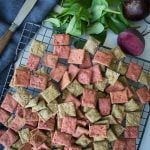
Veggie Crackers
These Savoury Veggie Crackers are a healthy and tasty snack option, perfect for lunchboxes or as a crispy, savoury bite with dips or spreads. Made with spinach (or beetroot) for a vibrant colour and a boost of nutrients, these crackers are packed with flavour and can easily be adapted to suit different dietary needs.
Servings: 50 crackers
Ingredients
- 60 ml water (¼ cup)
- 50 g baby spinach (2 large handfuls)
- 1 tbsp extra virgin olive oil -extra virgin
- 2 tsp sea salt
- 1 tsp coconut sugar or rapadura
- 1 tsp baking powder
- 2 tbsp sesame seeds -optional
- 1 tbsp nutritional yeast -optional
- 1 tsp garlic granules -or powder, optional (I've also used a clove of garlic processed with the spinach too)
- 200 g wholemeal spelt flour (1¾ cups approx.) see below for GF
Instructions
- Pre heat the oven to 180℃/350℉.
- In a high speed blender mix the water and spinach, scraping the sides until pureed. Thermomix 1 minute, speed 5 (you will need to scrape the sides quite a few times).
- Add the olive oil, sea salt, sugar, baking powder (and any optional ingredients) and mix together until combined. Thermomix 20 seconds, speed 4.
- Add the flour and mix until a dough the consistency of play-doh forms (so it holds together but doesn't stick to your hands).
- IMPORTANT - All whole flours are slightly different in the rate they absorb water. This is the reason white (highly refined flours) are used in processed foods because they bring consistent results. So you may need to adjust the amount of flour (or water) slightly to achieve the right consistency as described above (especially with the GF variation below).
- Form into a rough disc, place between two sheets of baking paper (or silicone sheets). I use 'If you Care' brand of baking paper, it's very non stick and can even be reused (it's that good).
- Roll until VERY thin (1-2mm). If they aren't thin enough they won't crisp up so keep rolling until the dough stops expanding. Remove the top piece of parchment and cut the dough with a pizza cutter or plastic ruler (my new way to get the squares nice and even).
- Lift this carefully onto a baking tray.
- Bake for 20-25 minutes. I find the outside rows cook quicker than the inside squares so I often take it from the oven at 20-25 minutes, remove the outer rows and return the middle crackers which are still not crisp enough to the oven for 5 minutes or until they are dry and crunchy.
Store
- In an airtight container. They can also be frozen and packed into the lunchbox (from frozen).
Notes
Gluten or grain-free
I've recipe tested these crackers with both gluten-free and paleo flours (both are also nut-free). I found these needed extra time in the oven to crisp up.Beetroot (pink crackers)
Replace the spinach with 50g of raw beetroot (about half a small beetroot), peeled and diced. This makes for little pink crackers.Garlic and sesame-free
Simply omit from the recipe.I'd love to hear how you enjoyed these - post your feedback in the comments below.
Detox Ice Blocks
At this time of year, I’m trying my hardest to wean myself and my kids off the sweet stuff (it’s been a very indulgent festive season) while really refocusing on including as many veggies in our diet as possible. One of my favourite ways to do this is with these detox ice blocks – a simple, refreshing treat that feels indulgent but is actually packed with goodness. Right now my main aim is to load as much nourishment into our meals and snacks as possible, leaving little room (or desire) for anything else. The plan is to have us all back on track in time for school to start again in a couple of weeks (read more here about why kids fall into the trap of craving processed foods).
The weather these past few weeks in QLD has been really hot and the kids have been asking for ice blocks after big mornings in the sun nipper/swim training. So I thought I’d whip something up that’s not only delicious, but helps them refuel and rehydrate. I freeze these in my low tox stainless steel iceblock moulds.
The nutrient dense veggies are well hidden behind the sweetness of the fruit. I personally don’t add in the extra sweetener, but taste the mixture prior to freezing and decide if you think you need to add it.
Health benefits
Beetroot is an anti-inflammatory, antioxidant, detoxifying and extremely nutrient rich vegetable. Research suggests it improves stamina and sports performance (this fact alone appeals to my sport loving kids). Zucchini (also know as courgette), is extremely low in calories and loaded with fibre. It is also a great source of potassium.
PS – I’ve written before about using smoothies to include extra vegetables in your diet (and therefore more nourishment), read more HERE if you’d like more inspiration for ‘hiding veggies’.
Ingredients
The key ingredients in this refreshing treat include beetroot, strawberries or raspberries, banana, zucchini, and coconut water. You can customise it by adding a protein powder for an extra boost, swapping the coconut water with nut milk, or using full-fat natural yoghurt for a creamier texture. This versatile recipe can also be made without banana by using mango instead.
How to make Detox Ice Blocks
To make these healthy treats, simply blend the beetroot, berries, banana, zucchini, and coconut water in a high-speed blender until smooth. Pour the mixture into ice block molds and freeze until set. If you’re using a Thermomix, blend on speed 9 for about 60 seconds, scraping the sides as needed.
Serving suggestions and how to store
Once set, these ice blocks make a delicious and hydrating snack or treat. Store any leftovers in the freezer, and enjoy them whenever you need a refreshing detox boost. You can also make a batch ahead of time for a week’s worth of healthy snacks.
Vary Detox Ice Blocks to suit your dietary needs
This detox ice block recipe is easy to adjust for various dietary needs. For a coconut-free version, simply swap the coconut water for nut milk. If you’re looking for a creamy version, replace the coconut water with full-fat natural yogurt or coconut yogurt. You can also replace the banana with mango for a different twist, or add a scoop of clean protein powder for an extra protein boost.black pepper, lemon juice digestion immunity vitamin c flavor ice cube tray ice cubes compounds favourite way fresh

Detox Ice Blocks
These simple ice blocks include two veggies in this delicious, nourishing treat.
Servings: 6
Ingredients
- 1 small beetroot -raw, peeled & quartered
- 250 g strawberries or raspberries (2 cups) fresh or frozen
- 1 banana/s
- ½ small zucchini/s -quartered
- 250 ml coconut water (1 cup)
- 85 g rice malt syrup, honey or maple syrup (¼ cup) optional
Instructions
- In a high powered blender, blend all of the ingredients until smooth. If using a Thermomix, 60 seconds, increasing slowly to speed 9 (scrape the sides).
- Divide between ice block moulds and freeze until set firm.
Notes
Coconut-free
Replace the coconut water with a nut milk.Make it creamy
Replace the coconut water with full-fat natural yoghurt or coconut yoghurt.No banana
Replace the banana with mango.Add Protein
I often add a scoop of a wholefoods protein powder. GoodnessMe have a fabulous selection of clean protein powders, you can take a look HERE.TIPS
- I've set these ice blocks in brilliant (and low-tox) stainless steel ice block moulds which you can shop for HERE.
- This recipe also makes a delicious smoothie (just add a cup of ice prior to blending it).
I hope your family loves this recipe. Post any questions or comments below.
6 Vegetables to Hide in a Smoothie (including recipes)
No matter what I’m cooking, I’m always thinking about how I can inject more nourishment, especially when it comes to feeding my kids. Because children are growing so rapidly, they have higher nutritional needs but much smaller stomachs, which means every mouthful has to count. One of my favourite ways to make this happen is by finding vegetables to hide in a smoothie – it’s a simple way to sneak in extra nutrients without a fuss.
One tip I always share with parents of finicky eaters is to work with what their kids already enjoy. If they love noodle soup, add a few extra vegetables next time. And if smoothies are their thing, fruit is a great start, but vegetables can give them a real nutrient boost. That’s why today I’m sharing my six favourite veggies that disappear beautifully in a smoothie.
Start small
When adding vegetables, start with a small amount and increase the quantity over time. If you happen to overdo it and the kids don’t like the taste of the smoothie, you can always add more fruit, re-blend (and freeze any leftover smoothie into ice blocks/ popsicle moulds).
Don’t rely on only ‘hiding’ vegetables
Whilst I am a huge fan of ‘boosting’ nutrition, I’m not a fan of always having to ‘hide’ vegetables for fussy eaters (in the long term at least) and you can read my views on hiding food and tips for veggie fussy kids here. Having said that, I do generally choose to ‘boost’ my kids smoothies with veggies they generally don’t enjoy eating in their whole form, just to increase their nutritional variety. I figure if they can’t taste it, why not add it?
My kids now know that vegetables belong in smoothies, so when they make their own, they generally add at least one. My 8yr old son who loves to experiment in the kitchen recently added rocket leaves to a blueberry smoothie he made for the family for breakfast – lets just say rocket is not on the following list of veggies to add to a smoothie!!
Which vegetables to hide in a smoothie…
1. Avocado
Okay, technically a fruit, but seeing as it doesn’t add any sweetness, I’m adding it to my list of nutrient boosters.
Why? Avocado is a rich source of mono-unsaturated fatty acids and one extremely nutrient dense fruit containing a wide variety of vitamins, minerals and antioxidants. It really helps a smoothie to be more sustaining and its potassium content makes is great to add to a smoothie before kids sport.
How? Avocado adds a lovely creamy, mousse like texture to smoothies so add it to your favourite combo. It is a secret ingredient in my Fruit Whip and Chocolate Breakfast Smoothie recipes.
2. Cauliflower
Raw cauliflower is pretty much undetectable in a smoothie. You will just need a good, high powered blender to process it smooth though.
Why? Cauliflower contains a rich supply of health-promoting phytochemicals, especially protective antioxidants and anti-inflammatory compounds. It supports digestion and liver detoxification and is a rich source of vitamin C.
How? Break it up into florets, wash and keep in a container to add to your morning smoothie. Because it is white it won’t effect the colour of the smoothie which is a real bonus. Start with one floret and build up to more if you like. Here’s a recipe for my Strawberry Shortcake Smoothie.
3. Zucchini (courgette)
Zucchini is one of my kids least favourite vegetables, especially cooked. But adding it raw into their smoothie, they are none the wiser.
Why? Zucchini (also know as courgette), is extremely low in calories and loaded with fibre. It is also a great source of potassium and vitamin C.
How? Zucchini is very tasteless and also doesn’t effect the colour of a smoothie much so is perfect to add a fibre and nutrient boost to your favourite smoothie. I add about the size of a quarter cup of zucchini to most smoothies.
4. Baby Spinach
Baby spinach is also rather tasteless but it does turn smoothies green. So for kids that aren’t keen on ‘green’ – it’s best to blend it with a chocolate smoothie so the colour is disguised.
Why? Spinach is host to a huge variety of vitamins, minerals, fibre and protective plant compounds. It’s just good!
How? As long as the colour isn’t a problem, add a handful to any smoothie. It is lovely in this Tropical Smoothie (which also contains avocado) and I love to add it to my Pine-Lime Splice (often with a handful of mint, it’s so good).
5. Sweet potato
Sweet potato can be added to smoothies either raw or cooked. For raw sweet potato you’ll need a powerful blender to ensure it is able to be processed smooth
Why? Sweet potato is a fibre and beta carotene rich veggie. It is host to good amounts of vitamin C, B vitamins and essential minerals.
How? Add a small piece of raw sweet potato or left over cooked sweet potato to any smoothie. I love raw sweet potato combined with orange and ginger.
6. Beetroot
Raw beetroot in a smoothie needs to be peeled and you also need a powerful blender to ensure it is able to be processed smooth.
Why? Beetroot is an anti-inflammatory, antioxidant, detoxifying and extremely nutrient rich vegetable. Research suggests it improves stamina and sports performance (this fact alone appeals to my sport loving kids).
How? Depending on the size of your beet, you will only need to include a small amount of beetroot. I love it with berries and chocolate so this Coco-beet Berry Smoothie is a delish combo that my whole family loves.
Well that’s it for my favourite vegetables to hide in a smoothie. What are your favourites and are there any I missed? Post your comments and questions below.
Coco-Beet Berry Smoothie
This Coco-Beet Berry Smoothie is a delicious and nutritious drink that’s perfect for breakfast or as a satisfying snack. With a blend of frozen berries, cacao powder, and the earthy sweetness of beetroot, this smoothie is not only packed with flavour but also loaded with antioxidants, healthy fats, and essential vitamins. It’s an easy way to start your day on a healthy note or enjoy a refreshing pick-me-up anytime!
Most mornings, my 7yr old son (the most laid back individual in the world and not particularly partial to anything to domesticated), makes the family a smoothie. Usually, he sticks to favourite combinations like berry, spinach, banana or pineapple, spinach, lime and mint; but occasionally, with a little guidance he likes to get creative.
My only stipulation with the morning smoothie is that it has a little veg in it (and he usually picks spinach or avocado). But one day recently he decided that we should try beetroot in the smoothie. A few weeks on, we’ve been fine-tuning this recipe and I think we’ve got to the really delicious stage, worthy of officially sharing.
Health benefits
This smoothie is a powerhouse of nutrition! Beetroot is an anti-inflammatory, antioxidant, detoxifying and extremely nutrient rich vegetable. Research suggests it improves stamina and sports performance (this fact alone appeals to my sport loving kids). Berries provide carbohydrates, vitamin C and antioxidants that help fight inflammation and support your immune system, while cacao powder adds a rich chocolate flavour along with magnesium for energy. The coconut water is rehydrating and the nut butter a great source of healthy fats and protein, keeping you full and satisfied.
Ingredients
To whip up this delicious beetroot smoothie, gather frozen raspberries (or frozen strawberries or a mix), cacao powder, peanut butter (or your favourite nut butter), rice malt syrup (honey or maple syrup), fresh beets, and coconut water.
How to make this beet smoothie recipe
Simply peel the beetroot and blend all the ingredients together in a high-powered blender until smooth. If you’re using a Thermomix, just blend for about 30 seconds on speed 9. It’s that easy! Pour into a glass and enjoy immediately for a refreshing and nutritious treat.
Serving suggestions and how to store
This coco-beet berry smoothie is best enjoyed fresh. If made with frozen berries it’s thick enough to turn into a smoothie bowl. If you have leftovers, you can freeze them into little cups or ice-block molds for a great snack another day.
Vary this coco-beet berry smoothie to suit
This smoothie is gluten-free, dairy-free and grain-free. But feel free to customise it to suit your dietary preferences! If you’re avoiding coconut, simply swap out the coconut water for your favourite milk (dairy or almond milk or coconut milk). For a nut-free version, replace the nut butter with tahini or omit it altogether. If you’re watching your fructose intake or are vegan, use rice malt syrup as your sweetener. You can also boost the protein content by adding a scoop of wholefoods protein powder for an extra nutritious kick!
Take a look at the variations (below the main recipe) for suggestions to alter the recipe to suit your specific dietary requirements.
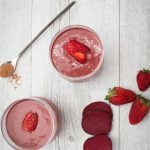
Coco-beet Berry Smoothie
This Coco-beet Berry Smoothie is a delicious way to include the super nourishing vegetable beetroot into your day. Try it, you won't be disappointed.
Servings: 2
Ingredients
- 100 g frozen raspberries (1 cup) or strawberries or a mix
- 2 tbsp cacao powder (unsweetened Dutch process or raw)
- 2 tbsp peanut butter (or any other nut butter)
- 1-2 tbsp rice malt syrup, honey or maple syrup
- ½ small raw beetroot -peeled and diced
- 250 ml coconut water (1 cup) or Coco Quench is nice too
Instructions
- Blend together in a high powered blender until smooth. Thermomix 30 seconds, speed 9.
- Enjoy as part of a very healthy breakfast or snack.
Store
- Leftovers can be frozen into little cups or ice-block moulds for a snack another day.
Notes
Coconut-free
Replace the coconut water with a nut-milk.Nut-free
Replace the nut butter with tahini (or just leave it out).Low-fructose
Choose rice malt syrup as your sweetener.Boost the protein
Stir through your favourite protein powder. I love using this collagen protein—it’s flavourless, so it works beautifully across all kinds of recipes without altering the taste.I'd love to hear how you like this veggie boosted smoothie. Post a comment to let me know.
Beetroot Coconut Ginger Soup
My whole family have all come to love this Beetroot Coconut Ginger Soup – not only is it a delicious combination of flavours, it’s incredibly nourishing and truly food as medicine!
I find the human palate an amazing thing – some people just eat anything that’s put in front of them and others are a little more discerning (sounds so much more classy than ‘fussy’). You might be surprised that I actually fit into the second category here. With age, I’ve certainly broadened my culinary horizons – largely due to my ‘eat anything at all’ husband, no matter how unusual. Also, as we have travelled a fair bit, so I’ve had to venture outside of my comfort zone and try new and sometimes unrecognisable things (and mostly I’ve been pleasantly surprised).
My son is just like his father – if he eats a prawn, he crunches the head and all. Recently, he couldn’t understand why he couldn’t eat the head off a sardine (yuk)! My daughter, on the other hand, is like me, a little more cautious.Which brings me to this soup, because she can really be quite picky with cooked beetroot (raw and fermented is fine though). However, this Beetroot, Coconut and Ginger soup has such a beautiful, velvety flavour that has been enough for her to accept it in its cooked form.
So before you flick away from this recipe thinking the kids or hubby will never eat this, I’d really encourage you to consider giving it a go.
Health Benefits
Beetroot is a rich source of fibre and many valuable and protective nutrients. It is a unique source of betaine, a nutrient that is known to help protect against inflammation, support liver detoxification, improve vascular risk factors, enhance (sports) performance and is likely to help prevent numerous chronic diseases. Coupled with the anti-inflammatory herbs ginger and turmeric and immune supporting coconut, this is one nutrition packed soup.
Ingredients
This healthy beet soup recipe uses simple, whole ingredients like fresh beetroot, carrots, apple, and ginger. Combined with stock and coconut milk, the ingredients come together to create a rich, delicious soup.
How to make beetroot soup
Start by sautéing the onion, garlic and ginger in a large saucepan until soft, then add the turmeric, beetroot, carrot, and apple along with your chosen stock. Simmer everything over a medium heat until tender, then blend with coconut milk until smooth.
Serving suggestions and how to store
Serve this gluten-free, healthy beetroot soup with a generous drizzle of coconut milk, fresh parsley, and lemon wedges. It pairs beautifully with a slice of crusty sourdough bread. Store any leftovers in the fridge for up to 3 days or freeze for up to 3 months.
Vary beetroot coconut ginger soup suit your dietary needs
For a dairy-free option, use ghee or olive oil instead of butter. To make it vegetarian or vegan, opt for vegetable stock and olive oil for sautéing. If you’re avoiding onions and garlic, try fennel and a pinch of chili flakes for a fresh twist.
For more delicious, easy to make, nourishing soups, click HERE.

Beetroot, Coconut and Ginger soup
This beetroot, coconut, and ginger soup is a vibrant, delicious soup that’s as nutritious as it is delicious. The combination of earthy beets, creamy coconut milk, and a zingy hit of ginger makes it a warming soup with a hint of sweetness and spice.
Servings: 4
Ingredients
- 2 tbsp butter, ghee or olive oil
- 2 onion/s -peeled & roughly diced
- 3 clove/s garlic -peeled & chopped
- 2 tbsp ginger root - peeled & finely grated
- 3 beetroot (medium)
- 1 tsp fresh turmeric root -grated (½ teaspoon if using dry)
- 2 carrot/s - diced
- 1 green apple - peeled & diced
- 720 ml chicken broth or stock (3 cups) or vegetable stock
- Sea salt and freshly ground black pepper - to taste
- 270 ml canned coconut milk
- ¼ bunch/s flat leaf parsley - chopped, to serve
- 1 lemon/s - wedges, to serve
Instructions
- In a medium sized pot, heat your butter, ghee or olive oil over a low heat and add the onion, garlic and ginger. Sauté gently for 10 minutes (do not brown).
- Peel and cut the beetroot into roughly the same sized pieces.
- Add to the pot with the turmeric, carrot, apple, stock and season well. Bring to the boil and then reduce to a slow simmer for about 15 minutes or until the beetroot is tender (when a fork can poke it easily).
- Allow to cool a little and place in a high-speed blender or food processor with the coconut milk (reserving ¼ can to serve). Blend (puree) until smooth and creamy. Taste and adjust the seasoning if necessary.
- If you have particularly earthy beets, you can add a teaspoon or two of sweetener (maple syrup or rice malt syrup) to counterbalance it.
- Garnish with parsley and the reserved coconut milk and serve with a wedge of lemon (this really compliments this flavour of the soup).
Themomix method
- Place your ginger and garlic in the TMX and chop 5 seconds, speed 5.
- Add the onions and chop 5 seconds, speed 5.
- Add the butter, ghee or olive oil and saute 3 minutes, 100, speed 1.
- Add the turmeric, beetroot and carrot, apple and chop further, 5 seconds, speed 4.
- Add the stock, seasoning and cook 15 minutes, temp 100, speed 2.
- Remove the lid and allow to cool for a few minutes. Add the coconut milk (reserving ¼ can to serve) and puree 20 seconds, speed 7.
- Taste and adjust the seasoning if necessary. If you have particularly earthy beets, you can add a teaspoon or two of sweetener (coconut syrup or rice malt syrup) to counterbalance it
- Garnish with parsley and the reserved coconut milk and serve with a wedge of lemon (this really compliments this flavour of the soup).
Make-ahead
- Re-heat in a pot over a low heat until just hot.
Store
- Store in an airtight container in the fridge or freezer.
Notes
Dairy-free
Use ghee or olive oil to sauté.Vegetarian and vegan
Choose ghee or olive oil to sauté and vegetable stock.Onion and garlic free
Replace the onion with a bulb of fennel, diced, and a pinch of chilli flakes.Love to hear your feedback on this slightly unusual soup. Post a comment below.
Hummus – much more than a dip!
This is my deliciously healthy Hummus recipe, of course with some interesting variations and colours too. There’s more to hummus than just a dip or a snack, so check out the variations below. I like my hummus to have a creamy consistency, but if you prefer it a little course, then just process it less.
Health benefits
The chickpeas are a high fibre, protein rich legume with a decent mineral profile (including good amounts of iron). The tahini is also a good source of protein and very rich in calcium. The lemon, garlic, and spices will strengthen your immune responses and the olive oil is a rich source of monounsaturated fat. Why wouldn’t you eat it?
WARNING! Most shop bought hummus, contain dangerous vegetable oils, so please make your own, it’s so very simple to do so. For more about why you must avoid vegetable oils, click here.
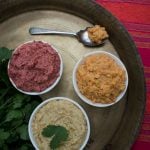
Hummus - much more than a dip!
Hummus is so much more than just a dip! This creamy, delicious spread made with chickpeas, tahini, and a hint of garlic and cumin is super versatile. Whether you're scooping it with veggies, spreading it on toast, or using it as a sauce, hummus is a must-have in any kitchen.
Servings: 1 cup
Ingredients
- 425 g can chickpeas - drained and rinsed
- 1 clove/s garlic - finely diced or crushed
- 4 tbsp hulled tahini - halve if using unhulled
- 1 lemon/s - juice (zest optional)
- 2 tbsp water - or the liquid from the can (aquafaba) makes it extra creamy
- 2 tbsp extra virgin olive oil - extra virgin
- ½ tsp ground cumin
- ½ tsp ground cinnamon
- ½ tsp sea salt - to taste
- ground black pepper - to taste
Instructions
- Add all of the ingredients into your food processor and process until smooth and creamy. You may have to scrape down the sides a few times to get an even consistency.
- Serve drizzled with more olive oil and sprinkle with sesame seeds or dukkah.
- Alternatively, try one of my variations below.
Thermomix
- Add the garlic and chop, 5 sec, speed 6.
- Add the chickpeas and process 5 sec, speed 5.
- Add the rest of the ingredients and process, 10 seconds, speed 4 scraping down the sides a few times.
Store
- Drizzle a layer of olive oil over the hummus to seal it. Store in an airtight container in the fridge.
- Can also be frozen.