
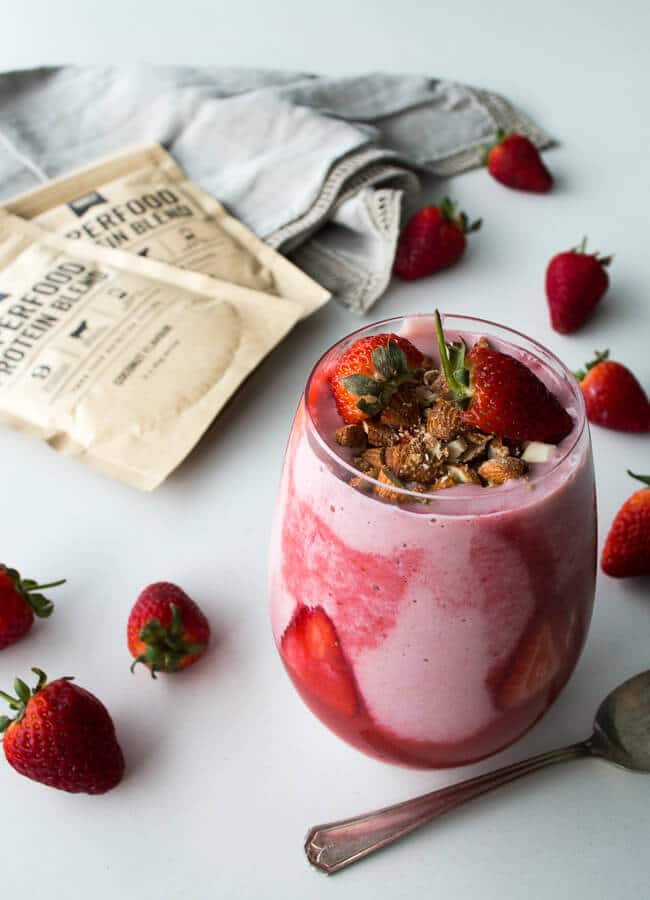
This strawberry shortcake protein smoothie has been an absolute lifesaver lately. You see my 10 year old son is growing at a rate of knots. He has size 10 adult mens feet (we call him ‘the hobbit’ lol) and he’s a big, athletic kid. He’s mad for sport and at the moment, he is training sometimes twice a day (athletics and nippers season is in full swing for him). So feeding him nutritionally balanced meals and snacks is especially important for his day to day wellness and his ability to train often and hard.
When I’m creating a meal, I primarily focus on the macronutrients – the balance I’m after is a complete source of protein, plant based carbohydrate (vegetables, fruit, whole grains) and good fats. I believe if they are coming from a variety of whole foods sources, the micronutrients take care of themselves.
Dietary variety really is key to good nutrition as it increases the range of micro-nutrients derived from food, therefore protecting against deficiencies developing. Carbohydrate I find pretty easy to include in meals and snacks, but ensuring a good variety of quality protein and fats, I find a little trickier.
Why is protein SO important?
We all need protein to build new cells and repair tissue. It is especially critical for kids, pregnant women, athletes, those suffering chronic illness or injury, those with dietary restrictions and the elderly. Protein is used extensively by everybody, everyday. Protein is used to make digestive enzymes, to repair the digestive tract, to make antibodies to fight infection, to grow skin, hair, nails, to make blood cells, for strong bones, to build muscle, to make hormones, to stabilise our blood sugar….I could go on forever really.
We cannot store protein, so it’s safe to say, that in order to replace, rebuild and repair, we need to consume protein very regularly.
Protein deficiency is common
In my experience, insufficient dietary protein is surprisingly common, especially amongst fussy kids, pregnant women, athletes, those with food intolerance and the elderly. The one thing that a swing towards processed foods has done, is dramatically reduced the amount of protein many people consume. You see most processed, convenience foods are generally a combination of fat and carbohydrate (breads, breakfast cereals, crackers, muesli bars, pasta and noodles). Anything with a shelf life is generally protein deficient.
It’s a bit of a vicious circle because people who are lacking protein also often reject eating it, craving high energy foods like refined, simple carbohydrate. They may also have also have a poor appetite for ‘meals’ and often just want to snack throughout the day. Poor variety is also another issue, where they may eat protein, but only from one source e.g.; dairy is common. To make matters worse, I’ve also found those deficient in protein are often also deficient in a number of key micronutrients (vitamins and mineral) found in good amounts in, you guessed it, protein rich foods. These micronutrients not only support their health, but help to build a robust appetite for other good foods (like veggies).
Protein supplementation
As you know, I’m a huge advocate of persisting to teach kids to love eating a good variety of whole foods – first and foremost. If you have a picky eater The Raising Well Nourished Kids Podcast is worth a listen to support you to support your young people in developing healthy eating habits and positive relationships with and through food. You can listen on Apple Podcasts, Spotify, YouTube or your favourite podcast App!
However, just as medicine is required occasionally for illness, supplementation is often critical in restoring the appetite and desire for whole foods, especially in picky eaters. Protein supplementation is also often required for people who suffer chronic illness, are athletes or suffering with food intolerance which restricts their protein intake (egg, nut, dairy allergies for example).
It is also very helpful for those mornings that go pear-shaped and a sustaining brekkie is required quickly. As much as I’d like to serve a nutritionally balanced, high protein brekkie each and every morning, some days time is just stretched (like when my kids have a 5am swim squad and we are up at 4.30am) and a protein powder supplement is invaluable.
The vast world of protein powders
Navigating the many types of protein powders available is tricky business. Many brands are derived from feed-lot, grain-fed cows (also often fed GMO’s), highly processed soy proteins and contain franken-sugars, fructose, maltodextrin starches (aggravate blood sugars and the GIT), additives and more yuk ingredients.
Most also contain absolutely no plant fibre, good fats or micronutrients (vitamins and mineral) so nutritionally they are incomplete and not at all reflective of a well rounded, whole food meal. Thankfully, there are a select few which offer balanced nutrition and do what we need them to do – provide a sustaining, nutritious supplement, and here’s the clincher, that actually tastes good. It’s just got to taste good right?
What to look for when choosing protein powders
When choosing a wholefood-based protein powder, there are several key factors to consider to ensure you’re getting a good-quality and effective product:
Ingredients: Look for a protein powder that is derived from wholefood sources, such as 100% grass-fed collagen, pea protein, brown rice protein (preferably non GMO, sprouted and fermented), hemp protein, or a blend of these. If you’re okay with dairy, choose a Whey based protein powder, ensure it is grass-fed and/or organic. Avoid products with additives, artificial flavours, excess sugar or artificial sweeteners.
Nutritional Profile: Assess the nutritional content beyond just protein. Look at the levels of essential amino acids, vitamins, and minerals present in the powder. A good wholefood-based protein powder will offer a range of nutrients beyond just protein.
Allergen Information: Consider any allergies or dietary restrictions. Wholefood-based protein powders are often suitable for those with common allergies (e.g., dairy, soy, gluten), but always check the label for potential allergens.
Taste and Texture: Personal preference matters too. Choose a protein powder that tastes good to you and mixes well with your favourite fruits and fluid (I love making smoothies with coconut water and yoghurt) or add protein powder to recipes like pancakes, overnight oats or chia puddings. Some wholefood-based powders can have a grainier texture, which may be a consideration.
By considering these factors, you can select a wholefood-based protein powder that aligns with your dietary preferences, nutritional needs, and taste preferences, ensuring you get the most out of your protein supplement.
I personally love using this collagen protein—it’s flavourless, so it works beautifully across all kinds of recipes without altering the taste.
Health benefits of this strawberry shortcake protein smoothie
Packed with antioxidants from strawberries, protein from yoghurt and almonds, and added fibre from raw cauliflower, this strawberry shortcake protein smoothie is a nutritious powerhouse. It provides a boost of energy, supports muscle recovery, and helps maintain a healthy gut.
Ingredients
The combination of strawberries, almonds, creamy yoghurt, and a hint of vanilla creates a naturally sweet smoothie that’s satisfying and nourishing. The shortcake-inspired almonds add a delicious crunch, making every sip a treat.
How to make this strawberry shortcake protein smoothie
Start by toasting almonds coated in maple syrup and protein powder for a crunchy shortcake topping. For the syrup, blend strawberries and maple or rice malt syrup. Then, blend the smoothie ingredients—frozen strawberries, cauliflower, coconut water, yoghurt, vanilla extract and plain or vanilla protein powder—until creamy. Assemble by swirling the strawberry syrup in the glass, pouring in the smoothie, and garnishing with the crunchy shortcake topping.
Serving suggestions and how to store
Serve this smoothie immediately with the crunchy almonds piled on top for the best texture. Leftovers can be frozen into popsicle moulds or small containers for a quick, nutritious snack later.
Vary this strawberry shortcake protein smoothie to suit
For a vegan option, use coconut yoghurt and a plant-based protein powder. If you’re short on time, blend all the ingredients together without worrying about the syrup and layering. Want a nut-free option? Swap almonds for sunflower or pumpkin seeds.
For more delicious, easy to make healthy smoothies, click HERE

Ingredients
Shortcake
- 35 g raw almonds (¼ cup)
- 1 tbsp maple syrup
- 1 serve/s wholefood protein powder -vanilla or plain flavour
Syrup
- 4-5 fresh strawberries
- 1-2 tbsp rice malt syrup or maple syrup
Smoothie
- 1½ cup/s frozen strawberries
- 2 floret/s cauliflower -raw and roughly chopped
- 60 ml coconut water (¼ cup)
- 250 g natural, Greek or coconut yoghurt (1 cup)
- 2 serve/s wholefood protein powder -vanilla or plain flavour
- 1 tsp vanilla -powder, extract or essence
- 2 fresh strawberries -sliced into flat edged quarters (for garnish)
Method
Shortcake
- On a tray line with baking paper place the almonds and drizzle with the syrup. Toss to coat. Sprinkle over the protein powder and toss to coat the nuts.
- Place under a low grill to toast for 5 minutes (watching carefully so they don't burn).
- You can always do a big batch of the nuts for a fabulous, protein rich snack (store in an airtight jar in the fridge but be careful - they are soooo moorish).
Syrup
- In a high powered blender place the strawberries and the syrup. Blend for 10 seconds to make a syrup and pour into the serving glasses. If using a Thermomix speed 8, 10 seconds.
Smoothie
- Without washing the blender, add the frozen strawberries, cauliflower, coconut water, yoghurt, vanilla and protein powder. Blend well until smooth and creamy. If using a Thermomix speed 9, 30 secs.
- Tilt the serving glass so the syrup coats the sides. Place the cut strawberries on the sides of the glass and carefully pour in the creamy smoothie touching the sides three times to create the streaky finish.
Serve
- With the roughly chopped nuts piled on top.
Store
- Leftovers can be frozen into little cups or ice-block moulds for a fast, healthy snack another day.
Variations
Shortcut
If you aren't bothered about how it looks, just add all of the ingredients for both the syrup and smoothie into the blender at once.Vegan
Choose the vegan protein blend and coconut yoghurt.Make ice-blocks
My kids love this blend frozen into ice-blocks. These are super convenient for a nutritious snack on the go.Enjoy (I know you will :)). Post your comments and any questions in the comments below.
Family Ad

Kate says
Thanks for this recipe Georgia, I really value your experience and listen to everything you say, especially on protein. I have a quick question about it, I have a little one (3.5years) who I just cannot get to eat meat, and therefore much protein. Sometimes she will eat a little egg (and I try pancakes made just with egg and banana) and she loves lentils and beans. But will not even touch or try any meat. On the flipside will happily eat most veggies, steamed broccoli or cauliflower etc but I feel like there are times she prefers to just eat fruit during the day. Any advice on how to up her protein another way to perhaps improve her appetite during the day? Thanks so much in advance, and totally understand if it’s too much to answer via this platform, wish you still took patients!! Kindest regards kate
Georgia Harding says
Hi Kate. I’ve written about protein here (including a paragraph on ideas for protein fussy kids) if you’d like more ideas https://wellnourished.com.au/simply-well-nourished-why-protein-packs-a-punch/. It’s super important that you understand how to combine vegetarian sources of protein to form a ‘complete’ protein (also explained in the post I’ve linked to). It can be a bit of a viscous circle, but keep trying. Being an ex-vego, I still find dishes slow cooked more appealing than ‘whole’ prices of meat so perhaps start there. I often find that protein fussy kids are mineral deficient (esp Zinc) and this leads to a sluggish appetite so perhaps talk to a Nat practitioner about this (a simple taste test can detect zinc deficiency). Hope this helps a little G x
Silvana says
Georgia, I have a question about the raw cauliflower. I have very sluggish digestion and have been advised, more than once to eat cooked foods. Is the cauliflower necessary or can I substitute with something else, or, add steamed cauliflower?
I also heard that as we age, we need less protein because we’re not growing and so need less protein – just enough to maintain what we have. Am curious about your thoughts on this.
Thanks
Georgia Harding says
Hi Silvana. You can certainly leave it out. I think if you steam it the taste will be more noticeable.
My understanding is that as we age, we actually need more protein (to sustain muscle mass and function which can decline rapidly with age and result in loss of mobility resulting in falls). Obviously we are all individuals and I can’t offer individual advice, but in my experience, it is very common to see signs of protein deficiency in my elderly patients. Hope this helps G x
Pippa says
One word … yum! I only had 180 chocolate flavour but it tasted great! Thanks Georgia.
Ros says
We’ve only got the chocolate flavour too. Will try it with that – fully expecting to make the smoothie a bit brown though. Did it?
Georgia Harding says
I would think it would slightly Ros, but if you rim the glass with the berry puree, it will disguise it a little G x
Georgia Harding says
So glad you enjoyed it Pippa. I love choc-berry combo’s too, great to know it’s just as good G x
Pokebros says
Came here for the recipe, though stayed longer for the article. Interesting read. The shake also looks really good and would be perfect for Summer.
Linda Robinson says
I haven’t tried this smoothie yet but your post prompted me to try the 180 Superfood Blends – I am hooked!! I have been struggling with energy levels, foggy brain, weight gain, inflammation etc since getting into bad habits whilst renovating. I was trying to eat well and exercise regularly but didn’t see the results I expected as I couldn’t stop eating too much and lacked the energy to do enough cardio exercise. A smoothie or chia pudding each day with 180 in it has made a huge difference in just two weeks – yay 🙂
Georgia Harding says
That’s so wonderful Linda, thanks for your feedback. I’m really thrilled you are enjoying it and feeling the benefits too. It’s a great supplement for sure. Georgia x
Arthur says
Thanks for sharing these yummy and healthy strawberry smoothies! I can’t wait to try these.
Georgia Harding says
Very welcome
Danielle Cosgrove says
I’ve been using raw cauli and broc in my smoothies for months and then thought I’d best steam them as it seemed like they should be cooked first… silly me, it definitely made my smoothies taste a bit yuck and I didn’t realise until reading your comment above about the flavour of the cauli being noticeable once steamed. *facepalm* moment there. So thank you for that haha I will be giving this a try in the morning (minus the protein powder though)
Well Nourished Team says
Hi Danielle…at least you know now how it would taste! ☺️