
This Banana Strawberry Smoothie is a simple but super delicious flavour combination. Banana is the ultimate smoothie companion, giving creaminess, fibre and potassium. Strawberries are sweet and colourful and provide some Vitamin C and manganese. I add in raw cauliflower for a bit of hormone and gut support (trust me, you wouldn’t know it was…
Cauliflower
Tray Bake Cauliflower Cheese
This Tray Bake Cauliflower Cheese makes having your favourite side every week very possible. It’s super quick and easy to make and you’ll have only one tray to wash up after. Plus, who doesn’t love the crispy, cheesy baked bits? Tip – leave it to rest for a few minutes before removing the cauliflower from…
Pickled Cauliflower Salad
A new local cafe recently opened with the most delicious Pickled Cauliflower Salad on the menu and I instantly fell in love with it. But by the time I add protein it’s a $27 meal so I set about recreating it in the cheapest, simplest possible way. I didn’t tell my family what I was…
Lamb Backstrap with Middle Eastern Salad
This Lamb Backstrap with Middle Eastern Salad is such a sensational combination of flavours, I can’t wait to hear what you think about it. It’s a great meal for those of you with mixed vegetarian / carnivore households (see the vegetarian variation to adapt). You can use any cut of lamb really but I’ve chosen…
Cauliflower Hummus
This roasted Cauliflower Hummus recipe is a lovely take on the legume based hummus. It’s a beautiful, creamy dip that’s loaded with goodness. I really think that cauliflower is the Swiss Army Knife of vegetables – so versatile, so tasty, stores well and readily available. Impress your friends and family with another use of this fabulous…
Cauliflower Hash Browns
I love using cauliflower instead of potatoes in many dishes, especially mash potatoes and these gluten-free Cauliflower Hash Browns. These are super simple and make tasty, crispy low carb hash browns for the win. Australian statistics report that we consume 3.2kg of cauliflower per person per year. I know in our household we would be…
KFC (Keralan Fried Cauliflower)
This KFC (Keralan Fried Cauliflower) is sure to become a family fave…mine are rating it as one of my best- possibly because fried food doesn’t happen too often! These delicious, gluten-free, crispy pieces of cauliflower are one sure-fire way to get kids to eat veggies and it’s a good fun side dish to have. Kerala…
Spiced Cauliflower Hazelnut Salad
This Spiced Cauliflower Hazelnut Salad recipe was designed to use the whole of the cauliflower so there’s no waste. It makes for a delicious tray bake meal (for two) or side dish (for four). Roasted cauliflower is just delightful and combined with crunchy hazelnuts, salty feta and zesty lemon, this is a dish that will…
Cashew Cauliflower Curry
This cashew cauliflower curry is a rich, creamy, and deeply satisfying dish that’s easy to make with just a handful of ingredients. Toasted cashews add a delicious crunch, while coconut milk and warming spices create a luscious sauce that coats tender cauliflower and peas. Whether you serve it with rice, quinoa, or cauliflower rice, this…
Cauliflower Cheese
This delicious roasted Cauliflower Cheese is a great way to eat this super versatile vegetable. This time, it is not being converted into cauli rice or hidden in an icecream, instead the whole head is steamed then topped with a delicious cheese sauce and roasted until golden. It is the ultimate comfort food to accompany…
Indian Baked Veggies
This delicious Indian Baked Vegetables brings the warmth and aroma of Indian spices onto your table. It is quick and easy, combining three vegetables for a tasty side or salad (or a meal for 2). I love combining roasted vegetables, spices and fresh leafy greens into a side dish to accompany a grilled protein. It’s…
Cauliflower Almond Lemon Tahini Salad
This Cauliflower Almond Lemon Tahini Salad is a lovely side dish or salad to accompany a simple meal of grilled protein. In the cooler months, I love to combine roasted or cooked vegetables with leafy greens…to me, it’s the perfect combination of essential nutrients and flavour. The cooked vegetables and spices ‘warm’ the dish up…
Vegetable Parmesan Thyme Croquettes
These vegetable parmesan thyme croquettes are a delicious way to enjoy a veggie-packed snack or side dish. Paired with a creamy garlic aioli, they will please any crowd. I often make these Vegetable, Parmesan, Thyme Croquettes for a quick lunch or light meal when I have vegetables to use up. You can vary the vegetables…
Cauliflower Rice
Cauliflower rice is a great substitute for white rice and a fabulous way to increase the nutrition in a dish. Cauliflower supports liver detoxification pathways as well as the cardiovascular, immune and digestive systems. You can use this yummy side to substitute rice in pretty much any meal at all, either as a side, or…
Lemon Mustard Lentils Cauliflower Carrots & Kale
This Lemon Mustard Lentils Cauliflower Carrots & Kale dish is a delicious, nutrient-packed meal that’s perfect for any time of year. Whether you’re looking for a quick weeknight dinner or a satisfying side, this dish is both tasty and easy to prepare.
A satisfying meal for me is always about serving a variety of flavours and textures. Whilst I enjoy a good serving of protein, I love to load my plate with loads of plant derived goodness. This Lemon Mustard Lentils, Cauliflower, Carrots, Kale is a super tasty side or a nourishing vegan meal.
Health benefits
If you look closely at the diets of long living cultures around the world, the one thing they have in common is that they all include lots of vegetables in their diets as well as beans, pulses and legumes. Puy lentils are a brilliant source of protein, fibre and many phytochemicals that help to prevent disease. Combined with three veg, spices and olive oil, this really is a very nourishing dish.
If you’d like more inspiration for interesting ways to make veggies shine in all their deliciousness, take a look at my ebook Well Nourished Sides and Salads. It’s just $9.95 and full of goodness that the whole family will love. Click HERE to find out more.
Ingredients
This recipe includes wholesome ingredients like roasted cauliflower, carrots, Puy lentils, and kale, complemented by a mustard marinade made from mustard seeds, extra virgin olive oil, honey, and lemon zest. The dressing is made with fresh lemon juice and garlic, creating a zesty and delicious finish.
How to make this healthy salad
To make this dish, start by preparing the mustard marinade and tossing the cauliflower and carrots in it before roasting until tender and golden. While the vegetables are cooking, prepare the lemon dressing by combining all ingredients in a jar. Toss the cooked lentils and kale with the dressing, then add the roasted vegetables once they’re ready. Serve immediately or store in the fridge for later use.
Serving suggestions and how to store
Serve this Lemon Mustard Lentils, Cauliflower, Carrots & Kale dish as a standalone meal or as a vibrant side to complement any protein. It’s perfect for meal prep, and you can store any leftovers in an airtight container in the fridge for up to a few days. Allow the dish to come to room temperature before serving if you’ve made it ahead.
Vary this to suit your dietary needs
This recipe is easily adaptable to suit various dietary preferences. For a legume-free option, simply swap the lentils for quinoa, rice, or buckwheat. If you need a garlic-free version, replace the garlic in the dressing with a pinch of chilli powder and ground cumin for a warming, spiced twist.
For more easy, delicious and healthy salad recipes, click HERE.
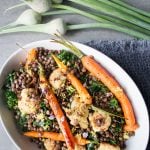
Lemon Mustard Lentils, Cauliflower, Carrots and Kale
This delicious vegetarian meal or side is a super nourishing addition to any dinner table.
Servings: 4
Ingredients
- 400 g cauliflower (approx. half head)
- 400 g Dutch carrots - peeled & trimmed to leave 2cm stem
- 1½ cups cooked Puy lentils (see legume-free below)
- 1 bunch/s kale - leaves stripped off the stems & torn
Mustard marinade
- 1 tbsp mustard seeds
- 2 tbsp extra virgin olive oil - extra virgin
- 1 tbsp honey (or maple syrup for vegan)
- 1 lemon/s - zest
Dressing
- 4 tbsp extra virgin olive oil - extra virgin
- 1 lemon/s (large) juice and zest
- 1 tsp sea salt - or to taste
- ground black pepper - to taste
- 1 clove/s garlic - crushed
Instructions
- Preheat the oven to 180°C/350°F (fan-forced).
- Make the marinade by grinding the mustard seeds using a mortar and pestle (or high speed blender) until the seeds are almost ground. Add the remaining marinade ingredients and mix until combined.
- Break the cauliflower into florets and add to a bowl with the carrots. Add the mustard marinade and combine thoroughly so that all the vegetables are coated.
- Spread the vegetables out on a baking tray in a single layer and roast for 40 mins, or until the vegetables are tender and just beginning to brown.
- Meanwhile, make the dressing. Place all of the ingredients into a jar and shake to combine.
- Place the cooked lentils and kale in a serving dish. Pour the dressing over the lentils and kale and toss well. Sit at room temperature whilst the vegetables continue to cook.
- When the vegetables are ready, toss them through the lentils/ kale and serve immediately.
- You can also make this ahead. Store in the fridge and allow to come down to room temperature prior to serving.
Store
- Store in an airtight container in the fridge.
Notes
Legume-free
Replace the lentils with quinoa, rice or buckwheat.Garlic-free
Replace the garlic with a pinch chilli powder and ground cumin.I'd love to hear how you enjoy this recipe. Post a comment below and let me know (or even just give it a star rating).

6 Vegetables to Hide in a Smoothie (including recipes)
No matter what I’m cooking, I’m always thinking about how I can inject more nourishment, especially when it comes to feeding my kids. Because children are growing so rapidly, they have higher nutritional needs but much smaller stomachs, which means every mouthful has to count. One of my favourite ways to make this happen is by finding vegetables to hide in a smoothie – it’s a simple way to sneak in extra nutrients without a fuss.
One tip I always share with parents of finicky eaters is to work with what their kids already enjoy. If they love noodle soup, add a few extra vegetables next time. And if smoothies are their thing, fruit is a great start, but vegetables can give them a real nutrient boost. That’s why today I’m sharing my six favourite veggies that disappear beautifully in a smoothie.
Start small
When adding vegetables, start with a small amount and increase the quantity over time. If you happen to overdo it and the kids don’t like the taste of the smoothie, you can always add more fruit, re-blend (and freeze any leftover smoothie into ice blocks/ popsicle moulds).
Don’t rely on only ‘hiding’ vegetables
Whilst I am a huge fan of ‘boosting’ nutrition, I’m not a fan of always having to ‘hide’ vegetables for fussy eaters (in the long term at least) and you can read my views on hiding food and tips for veggie fussy kids here. Having said that, I do generally choose to ‘boost’ my kids smoothies with veggies they generally don’t enjoy eating in their whole form, just to increase their nutritional variety. I figure if they can’t taste it, why not add it?
My kids now know that vegetables belong in smoothies, so when they make their own, they generally add at least one. My 8yr old son who loves to experiment in the kitchen recently added rocket leaves to a blueberry smoothie he made for the family for breakfast – lets just say rocket is not on the following list of veggies to add to a smoothie!!
Which vegetables to hide in a smoothie…
1. Avocado
Okay, technically a fruit, but seeing as it doesn’t add any sweetness, I’m adding it to my list of nutrient boosters.
Why? Avocado is a rich source of mono-unsaturated fatty acids and one extremely nutrient dense fruit containing a wide variety of vitamins, minerals and antioxidants. It really helps a smoothie to be more sustaining and its potassium content makes is great to add to a smoothie before kids sport.
How? Avocado adds a lovely creamy, mousse like texture to smoothies so add it to your favourite combo. It is a secret ingredient in my Fruit Whip and Chocolate Breakfast Smoothie recipes.
2. Cauliflower
Raw cauliflower is pretty much undetectable in a smoothie. You will just need a good, high powered blender to process it smooth though.
Why? Cauliflower contains a rich supply of health-promoting phytochemicals, especially protective antioxidants and anti-inflammatory compounds. It supports digestion and liver detoxification and is a rich source of vitamin C.
How? Break it up into florets, wash and keep in a container to add to your morning smoothie. Because it is white it won’t effect the colour of the smoothie which is a real bonus. Start with one floret and build up to more if you like. Here’s a recipe for my Strawberry Shortcake Smoothie.
3. Zucchini (courgette)
Zucchini is one of my kids least favourite vegetables, especially cooked. But adding it raw into their smoothie, they are none the wiser.
Why? Zucchini (also know as courgette), is extremely low in calories and loaded with fibre. It is also a great source of potassium and vitamin C.
How? Zucchini is very tasteless and also doesn’t effect the colour of a smoothie much so is perfect to add a fibre and nutrient boost to your favourite smoothie. I add about the size of a quarter cup of zucchini to most smoothies.
4. Baby Spinach
Baby spinach is also rather tasteless but it does turn smoothies green. So for kids that aren’t keen on ‘green’ – it’s best to blend it with a chocolate smoothie so the colour is disguised.
Why? Spinach is host to a huge variety of vitamins, minerals, fibre and protective plant compounds. It’s just good!
How? As long as the colour isn’t a problem, add a handful to any smoothie. It is lovely in this Tropical Smoothie (which also contains avocado) and I love to add it to my Pine-Lime Splice (often with a handful of mint, it’s so good).
5. Sweet potato
Sweet potato can be added to smoothies either raw or cooked. For raw sweet potato you’ll need a powerful blender to ensure it is able to be processed smooth
Why? Sweet potato is a fibre and beta carotene rich veggie. It is host to good amounts of vitamin C, B vitamins and essential minerals.
How? Add a small piece of raw sweet potato or left over cooked sweet potato to any smoothie. I love raw sweet potato combined with orange and ginger.
6. Beetroot
Raw beetroot in a smoothie needs to be peeled and you also need a powerful blender to ensure it is able to be processed smooth.
Why? Beetroot is an anti-inflammatory, antioxidant, detoxifying and extremely nutrient rich vegetable. Research suggests it improves stamina and sports performance (this fact alone appeals to my sport loving kids).
How? Depending on the size of your beet, you will only need to include a small amount of beetroot. I love it with berries and chocolate so this Coco-beet Berry Smoothie is a delish combo that my whole family loves.
Well that’s it for my favourite vegetables to hide in a smoothie. What are your favourites and are there any I missed? Post your comments and questions below.
Rainbow Detox Salad
Chopped salads are a favourite in our households because they are quick and easy to make and most importantly delicious. This Rainbow Detox Salad is packed with colourful veggies and bursting with fresh flavours. It’s a nutrient-dense, raw salad featuring cauliflower, broccoli, and carrot, with a creamy avocado and tahini dressing that ties it all together. Perfect for a light, refreshing meal or a side dish, it’s as beautiful as it is delicious.
This is a salad that often appeals to salad resistant kid and also toddlers because it’s texture is very different to eating the vegetables in their whole form. My daughter actually calls this ‘baby food’ salad because I often gave it to them when they were little (before they loved whole salads like they do now).
Why is it healthy?
The Rainbow Detox Salad is loaded with antioxidants, fibre, and vitamins. Broccoli and cauliflower both belong to the family of vegetables known as brassicas. They possess compounds that support both phases of liver detoxification (including the specific enzyme systems that processes known carcinogens).
Carrot, garlic, avocado, parsley, coriander are antioxidant rich and also support liver detoxification pathways. Pomegranate is a rich source of antioxidants. The fats in the avocado and tahini are anti-inflammatory and help to support the absorption of fat soluble vitamins. And the lime juice (or lemon juice) is rich in vitamin C.
There is 10g fibre, 7g protein per serve. Pair this salad with about 100g chicken, steak or tuna which adds about 25-30g extra protein making this a very nourishing meal.
Ingredients
This salad calls for fresh veggies like cauliflower, broccoli, and carrots, paired with herbs like parsley or coriander (cilantro). The creamy dressing is made from avocado, tahini, garlic, lime, and a touch of honey or rice malt syrup for sweetness. The pomegranate seeds on top add colour and flavour, making it a feast for the senses.
How to make this rainbow detox salad
To prepare, pulse the broccoli, cauliflower, carrot, and parsley in a food processor until finely chopped, being careful not to over-process. Then, blend the dressing ingredients—avocado, tahini, garlic, lime juice, and water—until smooth, adding water gradually for the desired consistency. Toss everything together and sprinkle with pomegranate seeds for a delicious and detoxifying salad.
Serving suggestions and how to store
Serve this rainbow detox salad immediately to enjoy the fresh crunch and vibrant flavours. It pairs wonderfully with grilled fish or chicken for a complete meal. If you have leftovers, store them in an airtight container in the fridge for up to a day, but note that the dressing is best enjoyed fresh.
Vary this rainbow detox salad to suit
You can easily modify this salad to suit your dietary preferences. For a garlic-free version, swap the garlic for grated ginger. If you need a sesame-free option, use almond butter instead of tahini. To make it fructose-friendly, opt for rice malt syrup as your sweetener instead of honey.
Take a look at the variations (below the main recipe) for suggestions to alter the recipe to suit many specific dietary requirements.
For lots more plant based recipe inspo, take a look at my hugely popular ebook ˜Well Nourished Sides and Salads’– where vegetables become the hero of the dish! It’s great value at just $9.95, click HERE to take a look.
For more delicious, healthy, easy to make salads click HERE.

Rainbow Detox Salad
This Rainbow Detox Salad is one nourishing salad - it truely is food as medicine without compromising on deliciousness.
Servings: 2
Ingredients
- ¼ head/s cauliflower -florets and stems
- ¼ head/s broccoli -florets and stems
- 1 carrot/s (large) roughly chopped
- ¼ bunch/s fresh parsley leaves -or coriander leaves
- ½ pomegranate -seeds (can sub raisins, craisens or fresh grapes), see method below for tips on removing the seeds from the pomegranate very easily
Dressing
- 1 clove/s garlic
- ½ avocado/s -flesh
- 1 tbsp hulled tahini
- ¼ tsp sea salt
- ground black pepper
- ½ lime/s -juice (or lemon)
- 1 tbsp rice malt syrup or honey (optional)
- 60 ml water (¼ cup approx.)
Instructions
- If your cauliflower and broccoli are small, use a half a head. If they are large stick with quarter.
- Place the broccoli, cauliflower, carrot, parsley or coriander in a food processor and pulse until just chopped. Set aside.
- If using a Thermomix, I use the turbo pulse button in short bursts. Please watch the consistency closely as you go (over-processing can result in a detox juice rather than salad)!
- You could also chop/grate by hand, obviously a bit more labour intensive.
- Now make your dressing. Personally, I don't bother to rinse my processor to make the dressing. Mix all of the ingredients (except the water) together until combined (if using a Thermomix 5-10 seconds, speed 4). Now add the water gradually until you get a thick consistency that can be drizzled over the chopped salad.
- Top with pomegranate seeds. The easiest way to remove the seeds is to cut the fruit in half, holding the cut side facing down in your palm. Bang the skin side of the fruit with a large metal spoon, the seeds should just fall out leaving the white pith behind.
- Drizzle over the dressing, toss and serve immediately.
Notes
Garlic-free
Replace the garlic with a 2cm piece of ginger root, finely grated.Sesame-free
Replace the tahini with almond butter or simply omit.Fructose-friendly
Choose rice malt as your sweetener.Love to hear if you and your family like this delicious and very nourishing salad? Please post a comment below.
Pumpkin Lasagne (with lots of twists)
My kids really don’t like pumpkin by itself (baked or steamed) – but they love it in soups (my favourite four recipes here) or in a lasagne or bake. So today I thought I’d share my veggie packed, creamy Pumpkin Lasagne.
This pumpkin lasagne is packed with layers of flavour, combining roasted veggies, spinach, feta, and a rich tomato sauce. It’s a delicious, nutrient-dense twist on the classic lasagne, perfect for a cozy family dinner, and easily adaptable for various dietary preferences. This is a really versatile recipe, so customise it to suit your family.
Health Benefits
This lasagne is a fibre rich, supercharged veggie bonanza, including lots of different coloured vegetables. The hero of this dish – pumpkin, is a rich source of antioxidants especially vitamin A and many other vitamins, minerals and protective phytochemicals. With the option to go gluten-free, dairy-free, or grain-free, this lasagne is a nutrient-rich meal that can suit almost any dietary need.
Ingredients
This pumpkin lasagne recipe features a roasted pumpkin and vegetable base, mixed with quark or ricotta, spinach blended with feta, and a simple tomato layer. Whether you’re using fresh lasagne sheets or zucchini ribbons, you’ll layer up for a wholesome and hearty dish.
How to make this Pumpkin Lasagne
Start by roasting the pumpkin, carrots, cauliflower, onion, and cloves garlic until soft, then blend into a smooth puree. Sauté spinach, onion, and garlic, blend with feta, and then begin layering your lasagne with pasta or zucchini, alternating between the pumpkin and spinach mixture. Top with tomatoes and parmesan before baking.
If you own a Thermomix, we’ve also included Thermomix instructions for this recipe.
Serving suggestions and how to store
Serve your pumpkin lasagna with a fresh green salad for added crunch. If you want perfect slices, chill it first, slice and then reheat when needed. Store leftovers in an airtight container in the refrigerator or freezer for easy reheating.
Vary this pumpkin lasagne to suit your dietary needs
To make this dairy-free, use nutritional yeast instead of parmesan, and swap quark and feta with cashew nuts. For a gluten- or grain-free option, choose gluten-free pasta sheets or use zucchini ribbons. You can also make this egg-free or vegan by following the suggested swaps!
Check out the variations below the main recipe for tips on how to adapt it to your specific dietary needs.
Explore more delicious, easy to make vegetarian meals HERE.
Or a good variety of lasagne recipes HERE.

Pumpkin Lasagne (with lots of twists)
My favourite vegetarian meal, this Pumpkin Lasagne is a plant powered, delicious delight. Even though it has a few layers, it really is simple to make and worth every minute of prep.
Servings: 6
Ingredients
Pumpkin layer
- 1 kg pumpkin (butternut or Jap) peeled and roughly sliced
- 2 carrot/s (large) roughly cut
- 200 g cauliflower (1½ cups approx.) florets broken apart
- 1 onion/s -peeled and sliced
- 2 clove/s garlic -peeled and sliced
- 1 tsp sea salt - or to taste
- ground black pepper -to taste
- 50 g butter, ghee or olive oil -melted
- 120 g quark or ricotta cheese (½ cup)
- 2 egg/s
- 100 g parmesan cheese (1 cup) finely grated (though only half of this will go in the pumpkin puree, the rest is for the top)
Spinach layer
- 50 g butter, ghee or olive oil -melted
- 1 onion/s (large) peeled and diced
- 1 clove/s garlic -peeled and crushed
- 300 g baby spinach -washed
- 100 g feta cheese -or goats feta
Tomato layer
- 400 g diced tinned tomatoes
- 1 tbsp dried oregano
Pasta layer
- Fresh lasagne sheets - regular or gluten-free (or for grain-free, use a large zucchini, cut into ribbons) I have also layered both to increase the veggie content.
Instructions
- Preheat your oven to 180°C/350°F (fan-forced).
- In a baking tray combine the pumpkin, carrots, cauliflower, onion, garlic and fat of your choice and toss together. I use the baking dish I plan to bake the final lasagne in (saves on washing up).
- Bake for approximately 30 minutes or until the vegetables are soft (cooked through but not overcooked).
- Whilst they are baking make your spinach layer by sautéing the onion and garlic in the pan with a little butter, ghee or coconut oil over a low heat until they start to soften (but not brown). Add the spinach and cook for a few minutes until the spinach wilts. Remove from the heat and place in a food processor (include any water from the wilting) with the feta or goat feta, and puree well. Set aside.
- Once your vegetables are baked, allow to cool a little and then puree in a food processor with the quark or ricotta, eggs, half the parmesan and more seasoning if required. The consistency should be just runny enough to pour (so the lasagne doesn't end up too dry as the pasta sucks up moisture when cooking). If it is very thick add a little splash of water and process again.
- Mix the oregano in with the tomatoes (I just add it to the can and gently mix).
- Now arrange the lasagne using your chosen sheets of pasta or ribbons of zucchini.
- Grease the baking dish and layer pasta (or zucchini), followed by a third of the pumpkin, pasta, half the spinach and repeat. Finish with the last third of pumpkin puree, followed by all of the tomatoes and top with the remaining parmesan cheese.
- Bake for approximately 30-40 minutes or until brown on top and the pasta is cooked through.
- Lasagne is always easiest to slice once chilled. If it is important to have nice neat slices, chill and then slice and then re-heat. Otherwise, serve immediately.
Thermomix Method
- Grate the parmesan (10 seconds, speed 8). Set aside.
- Follow step 1, 2 and 3 above.
- For the spinach layer, chop the onion and garlic (3 seconds, speed 5). Scrape down the sides and add the fat of your choice (cook 3 minutes, temp 80, speed 1).
- Add the spinach (cook 3 minutes, temp 90, speed 2).
- Finally, add the feta and puree (10 seconds, speed 5). Set aside.
- Without washing the bowl, puree your pumpkin mix (20 seconds, speed 5). Add half of the parmesan the quark, eggs and puree again (20 seconds, speed 6). Taste and season again if required.
- Go to step 6 above, to finish.
Time saving tip
- If you're not bothered about layers, you can combine the spinach and pumpkin to save time. Just add the onion and garlic (from the spinach layer) in the baking dish with the pumpkin/veggies and then puree all together with the spinach (raw is fine) and cheeses or DF options)
Serve
- With a leafy green salad.
Make ahead
- Re-heat in a low oven until just hot.
Store
- Store in an airtight container in the fridge. I store it in a rectangle shaped oven proof glass pyrex or glass lock container so I can simply remove the lid and reheat in the storage container (saves washing up).
- Can also be frozen.
Notes
Dairy-free
Sub the parmesan with the same amount of nutritional yeast and a good pinch of sea salt. Sub the quark for ½ cup of cashew nuts (preferably soaked and throw them in with the vegetables to toast) and the feta for ¼ cup of cashew nuts (soaked) and a good pinch of salt. Top with chopped walnuts (and the other half of the nutritional yeast) instead of the parmesan.Gluten and grain-free
Use gluten-free pasta sheets or for grain-free use zucchini. I often alternate pasta/zucchini.Egg-free
Omit the eggs, it is still delicious, just not as firm. The lasagne in the photo is egg-free.Vegan
Combine dairy-free and egg-free versions above.Onion-free
Replace the onion with one large bulb of fennel, finely diced (and divided between the two layers).Garlic-free
Replace the garlic with a teaspoon of cumin and a pinch of cayenne pepper.I'd love to hear how you like this family favourite. Post a comment and let me know (you could also simply rate the recipe).
Cauliflower Cheese Soup (with a dairy free option)
This Cauliflower Cheese Soup is a creamy, comforting dish packed with nutrients. The combination of cauliflower, cannellini beans, and parmesan makes it fibre rich and super satisfying, with a dairy-free option for those who need it.
After all “Cauliflower is nothing but a cabbage with a college education” Mark Twain
Health benefits
Like its cruciferous cousins, cauliflower is a rich source of many micronutrients (vitamins and minerals, especially folate and Vitamin C) not to mention, bursting with fibre. It also contains glucosinolates (sulphur containing plant chemicals) many of which have been researched for their promising anti-cancer properties. The cannellini beans in this dish add in some plant powered protein and additional fibre. The broth is calcium rich and heals the gut and soul and the onion and garlic further supports immune function.
Ingredients
You’ll need cauliflower florets, cannellini beans, onion, cloves garlic, chicken stock or bone broth, and parmesan cheese for the classic version. For serving, you’ll garnish with peas, chives, and a drizzle of lemon-infused olive oil.
How to make Cauliflower Cheese Soup (with a dairy free option)
Start by sautéing the onion and garlic in butter or ghee, then add the half head cauliflower, beans, and broth. Let everything simmer until the cauliflower is tender. After cooling slightly, blend it all together with parmesan until it has a smooth texture, then season to taste. Divide between four bowls and serve hot with peas, chives, and a drizzle of lemon-infused olive oil.
Serving suggestions and how to store
Serve this gluten-free cauliflower soup recipe as a light lunch or dinner, with a side of crusty bread or a green salad. It stores well in the fridge or freezer, so make a big batch for easy reheating on busy days.
Vary this cauliflower cheese soup to suit
For a dairy-free version, replace parmesan with nutritional yeast and use olive oil instead of butter. Omit the beans and peas for a legume-free option, or swap cauliflower for broccoli to create a delicious broccoli cheese soup.
Take a look at the variations (below the main recipe) for suggestions to alter the recipe to suit your specific dietary requirements.
For more delicious, nourishing and easy to make soup recipes, click HERE.

Cauliflower Cheese Soup (with a dairy free option)
One of my families favourite ways to eat cauliflower, my Cauliflower Cheese Soup is tasty, easy to make and very nourishing.
Servings: 4
Ingredients
- 1 large onion/s peeled and finely diced
- 1 clove/s garlic peeled and chopped
- 25 g butter, ghee or macadamia oil
- 400 g cauliflower (approx. ½ head), broken into florets
- 400 g can cannellini beans -drained and rinsed
- 3-400 ml chicken broth or stock (I used chicken), recipe here
- 50 g parmesan cheese -finely grated
- Sea salt and freshly ground black pepper -to taste
- 75 g peas (½ cup) blanched in boiling water
- 2 tbsp fresh chives -chopped (to serve)
- 2 tbsp lemon infused olive oil - I like Cobram Estate brand (to serve)
Instructions
- In a large pot sauté the onion and garlic in the butter or ghee for a minute or two until just starting to soften, but not brown.
- Add the cauliflower, cannellini beans, and stock and bring to the boil. Simmer until the cauliflower is just cooked (and you can slice through it easily with a knife).
- Remove from the heat and allow to cool a little.
- Puree in a food processor or powerful blender with the parmesan cheese.
- Taste and season if necessary.
- Serve hot with the peas, chives and a drizzle of lemon infused olive oil.
Thermomix Method
- Grate the parmesan, 5 seconds, speed 6 and set aside.
- Chop the onion and garlic, 10 seconds, speed 5.
- Add the butter and saute, temp. 100, 2 mins, speed 1.
- Add the cauliflower and chop 10 seconds, speed 6.
- Scrape down the sides, add the beans and broth and cook temp. 100, 15 mins, speed 2.
- Add the parmesan and blend for 20 seconds, speed 6.
- Season and serve as above.
Tip
- Adjust the consistency of this by adding more or less broth.
Make-ahead
- Re-heat in a pot over a low heat until just hot.
Store
- Store in an airtight container in the fridge or freezer.
Notes
Vegetarian
Use vegetable stock.Dairy-free and vegan
Just don’t add the cheese or replace with 2 tablespoons of nutritional yeast (which gives a very similar flavour). Taste it as you add the yeast gradually to achieve the level of 'cheesiness' you like. Use olive oil instead of butter or ghee.Legume-free
Simply omit the beans/ peas to if you like and increase the cauliflower buy about a cup.Onion and garlic-free
Replace them with a small bulb of fennel, diced and a pinch of chilli flakes or powder.Broccoli cheese soup
Sub the cauliflower for broccoli for another delicious soup.I love this soup - how about you. Did you try the dairy-free version? I'd love to hear how you like it.
Cauliflower, Broccoli and Lemon Salad
This Cauliflower and Broccoli Salad is a fresh, crunchy, and delicious side dish that’s perfect for any occasion. Packed with nutrient-rich veggies and topped with feta and toasted almonds, it’s easy to throw together and adds a whole lot of flavour and nutrition to any meal. I love this because it is very simple to make, can be pre-prepared for dinner and it’s great for entertaining a large group too.
Health benefits of this easy to prepare salad?
With its combination of antioxidant rich cruciferous vegetables, healthy fats from olive oil, and the option to add fresh herbs, this easy broccoli and cauliflower salad recipe is a great way to include a variety of nourishing ingredients into your day. Almonds contribute health promoting minerals, protein and good fats. The vitamin C rich lemon zest and lemon juice will support a healthy immune system. Another simple ‘super’ food side to compliment your meal.
The dressing, almonds, and feta are often enough to convert fussy children too. It takes boring old vegetables to another level!
Ingredients
You’ll need cauliflower, broccoli, red onion, flaked almonds, and feta cheese. For the dressing, grab a lemon, some extra virgin olive oil, Dijon mustard, sea salt, and freshly ground black pepper. Pour it over just prior to serving. Optional fresh herbs like mint or parsley can add a nice touch. It’s such a great combination of tastes and textures.
Instructions to make Cauliflower, Broccoli and Lemon Salad
Steam the cauliflower and broccoli florets for just a couple of minutes, making sure they stay crunchy. After refreshing them under cold water, toss with red onion, almonds, and crumbled feta in a large bowl or salad platter. Drizzle with a tangy lemon-Dijon dressing just before serving to bring all the flavours together. It has such a short prep time for such a delicious side.
Serving suggestions and how to store
This easy broccoli cauliflower salad recipe pairs wonderfully with grilled meats (like fish, chicken, salmon or lamb) or as a fresh side for any meal. Store leftovers in an airtight container in the fridge, and if you have extra dressing, keep it in a jar to use for another salad.
Vary this to suit your dietary needs
For a dairy-free or vegan option, simply omit the feta. If you’re nut-free, swap the almonds for pumpkin or sunflower seeds, and for an onion-free version, use spring onions or sliced radish instead.
Want more sides and salad inspo?
For lots more sides and salad inspo, take a look at my hugely popular ebook ‘Well Nourished Sides and Salads’– where vegetables become the hero of the dish! It’s great value at just $9.95, click HERE to take a look.

Cauliflower, broccoli and lemon salad
Looking for a quick and easy side dish? This Cauliflower and Broccoli Salad is light, fresh, and full of flavour. With crunchy veggies, toasted almonds, and creamy feta, it’s the perfect addition to any meal and can be ready in minutes!
Servings: 4
Ingredients
- ½ cauliflower -washed and cut into small florets
- ½ broccoli -washed and cut into small florets
- 1 red onion/s -peeled, halved and sliced
- 40 g flaked almonds (½ cup) toasted
- 100 g feta cheese (Persian or danish is best)
Dressing
- 1 lemon/s -zest and juice
- 60 ml extra virgin olive oil (¼ cup) extra virgin
- 1 tsp dijon mustard -this makes it creamy, not spicy
- Sea salt and freshly ground black pepper - to taste
Optional extras
- ½ bunch/s fresh mint leaves ( lovely with lamb especially)
- ½ bunch/s fresh parsley leaves -for a green iron boost
Instructions
- Steam the cauliflower and broccoli until they just start to cook, about 2 minutes over boiling water (they should still be a little crunchy).
- Remove from the heat and refresh by running under cold water (this stops them from continuing to cook).
- Drain well and place in a salad bowl.
- Mix all the ingredients for the dressing together and set aside.
- Add the almonds, onion and feta and dress just prior to serving.
Store
- Store in an airtight container in the fridge.
- If there is any extra dressing, pop it in a jar in the fridge for another salad.